


If you have ever heard the terms “Emergency Heat, Auxiliary Heat,” “Strip Heat,” and “Supplemental Heat,” these terms refer to the electric auxiliary heat utilized by heat pumps. This auxiliary source of heat should only operate when the heat pump goes into a defrost cycle.
Defrost Cycle
This refers to the cycle of operation when the heat pump self-defrosts. This usually occurs a few times per hour, depending on the outside temperature and weather conditions. Some common complaints and concerns that arise during the defrost cycle are complaints of odd, loud noises and the appearance of steam or smoke rising off the heat pump. While this may seem odd, this is normal. This process is necessary to remove frost and ice buildup that accumulate during operation in cold temperatures.
Thermostat
Understanding the correct use of the thermostat is essential for ensuring proper operation of the heat pump. If replacing your thermostat, ensure a heat pump thermostat is used. Other heat source thermostats are not compatible with heat pumps.
- Mode selection should remain in the “heat” mode. “Emergency heat” mode should only be selected when heat is needed in an emergency.
- If the desired thermostat set point is to be increased, do so in one-degree increments. If there is a two-degree or more difference between the room temperature and the set point temperature, the emergency heat will activate. Keeping a specific thermostat setting based on your comfort and not adjusting the thermostat is the most energy-efficient practice.
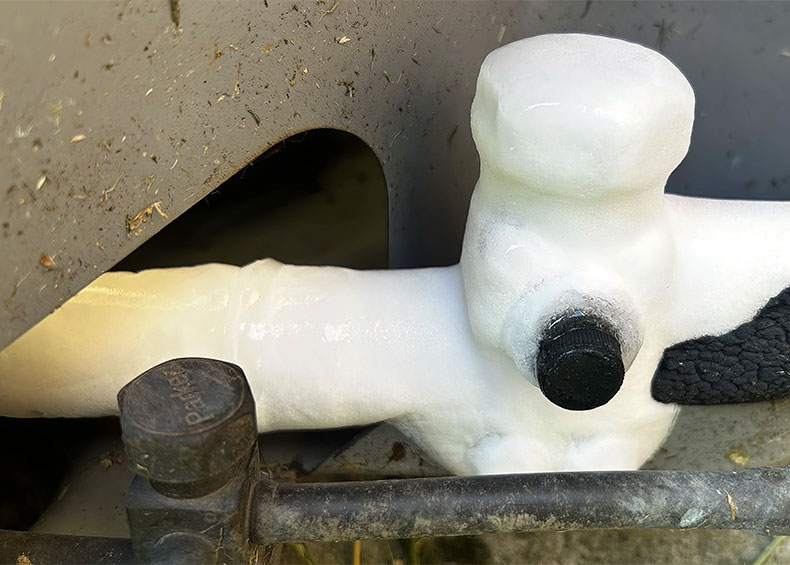
Ice build-up on refrigerant line
Examining Your Heat Pump
Occasionally, perform a visual inspection of your heat pump. There should be no visible signs of ice buildup on the interconnecting copper lines that connect the heat pump to the indoor air handling portion of the heat pump; any visible ice indicates an issue with the heating system. While the heat pump is running, the outdoor fan should operate in conjunction with the compressor. A small amount of frost on the outside of the unit is normal when the temperature is at or around freezing temperatures. This frost will be removed during the heat pump’s defrost cycle.
If any of these issues are noticed, contact a HVAC company to inspect your heating system. For any questions about heat pumps and heating systems, contact one of our energy advisors at 704-289-3145.
Is your home ready for cold weather?
While winter’s cold weather can produce higher home energy use, the good news is Union Power is committed to helping you stick to your New Year’s resolution of reducing your monthly utility bill. Here are some tips to help you save both energy and money when cold weather strikes.
More stories like this

Don’t Get Spooked by a Scam

Stay Connected When It Matters Most

Rooted in Community, Powered by Purpose
