


On the wall is the indoor head of a ductless system. (image courtesy of GE)
Ductless heating and cooling systems are a great option for many homes. Also called “mini-splits,” ductless heat pumps have been around for more than 30 years and are commonly used overseas. The technology has gained attention as U.S. homeowners seek more energy-efficient products.
For a typical U.S. home, heating and cooling accounts for nearly half of the energy bill. Ductless heat pumps can offer significant long-term savings compared to traditional heating options.
According to the NW Ductless Heat Pump Project, “The average cost of an installed ductless heating and cooling system with a single indoor heating/cooling head is between $3,000 and $5,000. Additional heads and greater heating and cooling capacities will increase the cost of the system. Other factors that will affect the cost of an installed system include manufacturer and model, refrigerant line-set length, difficulty of installation and contractor rates.”
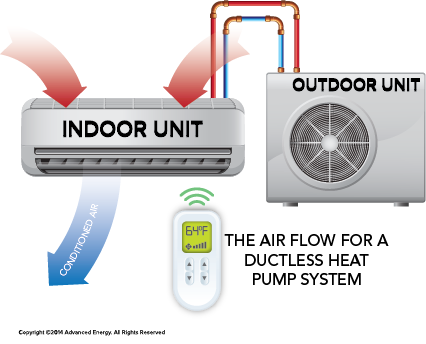
How do they work?
A ductless heat pump is a heating and cooling system that does not require air ducts. A compressor sits outside the house, while inside the house there are one or more air-handling units, called “heads,” that are mounted high on a wall or ceiling and are connected to the outdoor compressor by two refrigerant lines. Each indoor head is located in a heating and cooling zone—like a living space or bedroom—that can be controlled separately with a dedicated thermostat. When in use, the heads produce a whisper-like purr as a fan blows heated or cooled air into the space.
Ductless systems are very efficient—using 25 to 50 percent less energy than baseboard heat and ducted heat pumps.
What factors contribute to energy savings?
Modern technology
Ductless systems have special motors, fans and controls that minimize the system’s electricity use. The compressors and interior fans, for example, can ramp up or down depending on the immediate heating and cooling needs, thus saving dollars and maintaining more consistent and comfortable temperatures than traditional heat pumps. Special components also make ductless heat pumps able to operate in much colder temperatures than traditional heat pump systems. Though efficiency decreases as the outdoor temperatures drop, systems will still keep homes affordably warm.
No ducts
The U.S. Department of Energy estimates that ducts can account for up to 30 percent of heating and cooling loss. So for every dollar you spend on a ducted heating and cooling system, 33 cents of that dollar is possibly spent unintentionally heating and cooling your basement, crawl space or attic.
Share Your Thoughts
Have a question about this story or just want to share what you thought? We’d love to hear from you!
Related Stories
View All


Electric Co-op Internships are Opening Doors for Industry Careers
NC electric co-op internships help students launch careers in the industry