


Dry-stack stone walls are easy to construct and visually appealing.
For a productive height in veggie or herb beds, 6-inch-tall walls are often touted as the bare minimum, but on terra firma plots that have never been struck with a shovel, based on my experience, better results with growable edibles now and in the years to come will be had with beds at least 12 inches above ground. This is especially true for root crops such as carrots, onions, radishes and turnips. Width matters as well — stretch the beds as long as Texas, if you want, but no more than 4 feet wide to minimize embarrassing face plants while reaching in for the harvestable goodies.
Beds for perennials and flowers also can be elevated within the confines of wooden timbers, but to introduce the visual aesthetics of curves, curls and swerves into a landscape design, brick or stone are excellent options. Bonding with mortar will create lasting walls, but care must be taken to allow for proper drainage. As an alternative, dry-stacking with bricks or stone is an easier DIY project, and it automatically solves any drainage problems. One more option, interlocking pavers, is tough to beat for strength and good drainage without the use of mortar.
Whatever material you use, resist building walls over 2 feet high because, not only will stability become an issue, but the whole project could easily take on the look of a bunker. Create staggered terraces for extra height. This wall-topping-wall approach will be much easier on the eyes and won’t sacrifice structural strength. Terracing also allows plants to interact vertically, with weeping, crawling pretties spilling downwards while vigorous vines stretch their wandering ways up to higher levels.
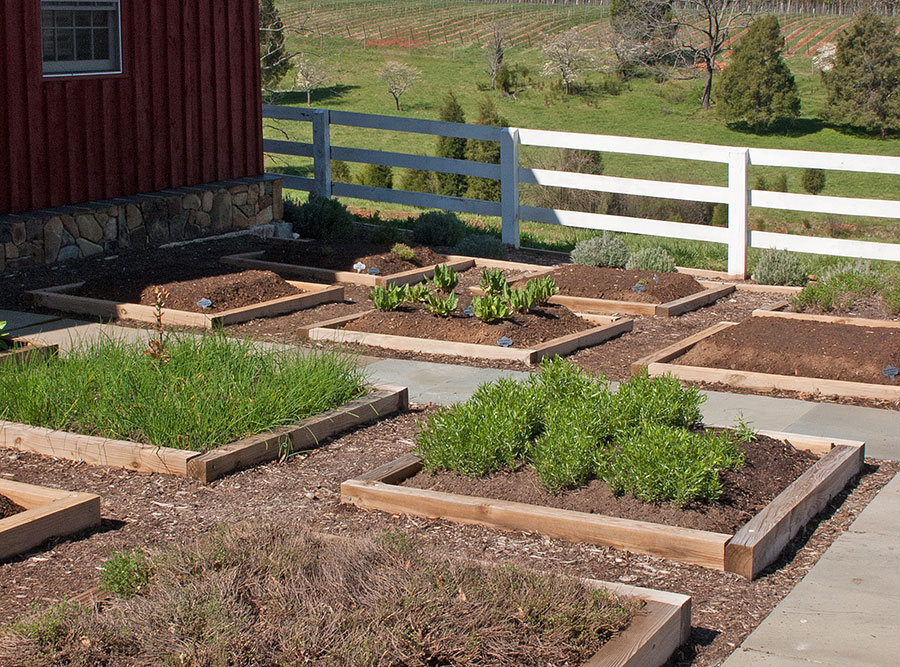
A Colonial-style raised herb garden being prepared for the new spring
Filling in
Once the walls are built, prepare the soon-to-be subsoil in the bottom of the beds. Remove any existing vegetation, and roughly turn over undisturbed dirt to open up plenty of additional easy avenues for future developing roots to explore. This step is especially important if you are gardening in clay that is hard enough to tap dance on, but whatever the soil’s texture, such ground pounding also helps rid the area of unwanted roots and stones.
For small raised gardens, several bags of commercial garden dirt and soil conditioner from your local, friendly garden center will probably be enough to fill the beds. Bigger projects, however, often need trucks of dirt. While it is certainly tempting in price to just have a load of fill dirt brought in, resist this urge by asking yourself one simple question: Do you really want to take the chance of winding up with someone else’s rocks, sticks and other assorted useless chunks of refuse? As a better option, check with nearby nurseries or landscaping businesses for screened topsoil. Also ask if they have processed compost available. If so, grab a truck-size heapin’ helpin’ of this garden “black gold,” because it is a garden-given that most plants will grow better in compost-enriched soil.
Fill the raised beds to within about 2 inches of the top. This will allow room for a layer of organic mulch, which can be added in the late spring to help retain ground moisture during dry spells as well as deflect the worst of the sun’s heat on plant roots in the thick of the summer.
Mulch, like compost, will break down over the course of a growing season, causing the soil level to sink, but this, as Martha Stewart says, is a good thing — it simply leaves space for more beneficial organic ingredients to be added to your new raised beds next year!
About the Author
Share Your Thoughts
Have a question about this story or just want to share what you thought? We’d love to hear from you!
More Carolina Gardens


Deer Me! What’s Eating Your Landscape?
Try these three methods to keep your yard off the menu