


Tucker Lemley, Chief Executive Officer
What is net metering?
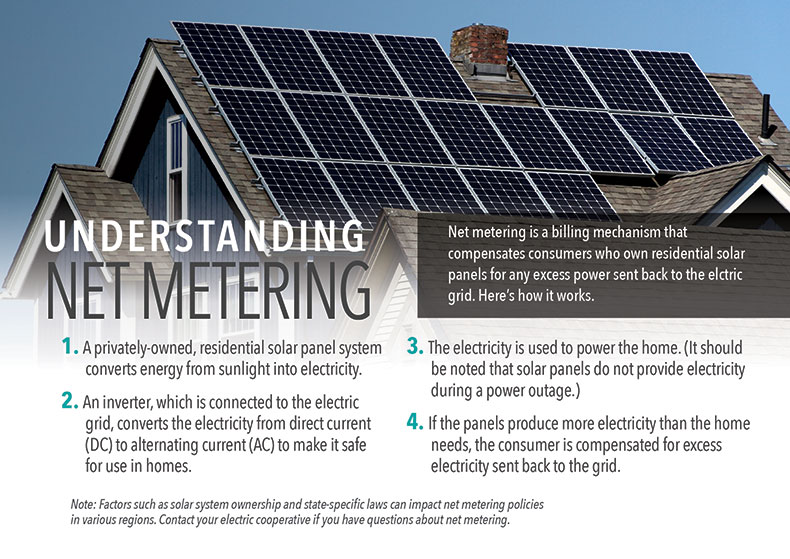
Halifax EMC offers a net metering program, which compensates solar owners for any excess electricity the system produces. If a solar system generates more power than the home requires (typically during peak sunlight hours), the additional electricity can be fed back into the electric grid. In return, the homeowner will receive a credit on their energy bill for the excess energy. This billing arrangement is known as “net metering.” While rooftop solar is the most popular renewable generation source for homeowners, it should be noted that net metering can also be applied to small-scale wind, hydroelectric, geothermal and biomass systems that generate electricity.
How does Halifax EMC know how much to credit for the excess power?
When rooftop solar panels produce less electricity than the home requires, the electric meter runs forward, just as it would on a home without solar panels. But when the solar system generates more electricity than you need, the electric meter runs backward, and the excess power is sent back to the grid. At the end of the billing cycle, you are charged for the “net” energy used from the electric grid. It’s important to understand that the amount of electricity you use does not include the full cost of maintaining grid infrastructure that supports your home year-round. This is why you will typically see charges (in addition to “net” use) that help recover the cost of system operations and maintenance. Halifax EMC charges a supplemental monthly basic charge of $20 to help recover these costs.
Who uses the excess power generated by the solar system?
The electricity produced by rooftop solar doesn’t go directly to your neighbors. The power flows back to the local grid managed by Halifax EMC. We then apply the credits for any excess power you’ve contributed.
While generating electricity from the sun (and sending excess power back to the grid) is an exciting opportunity, it’s important to thoroughly research the details and understand the economics before installing solar panels or any other type of small-scale renewable energy system.
Halifax EMC members who install solar and participate in net metering will need to sign an interconnection application and submit a non-refundable application fee, as well as an interconnection agreement, and ensure a bi-directional electric meter is installed. To view additional requirements, visit halifaxemc.com.
You should also work with a reputable solar vendor to ensure generation estimates are realistic and that your home is equipped for the system.
It’s important to note that net metering will not eliminate your energy bill. Even if you generate as much electricity as you use, which is rare, you will continue to be billed for essential services such as grid access, service fees and other fixed costs that are necessary to maintain a safe and reliable system.
Interested in solar and net metering?
If you’re interested in solar or would like to learn more about net metering, Halifax EMC can help. By connecting with us first, you can gain a better understanding of the solar energy system, billing options and more.
More News from Halifax EMC


The Value of Electricity
A Word About Halifax EMC by Tucker Lemley, Chief Executive Officer

