


Amadou Fall
The nuclear technology making news lately builds on concepts used in those traditional reactors. In May, the Tennessee Valley Authority, which provides power to several utilities across the Southeast, became the first U.S. utility to submit a construction permit for a small modular reactor (SMR). There are very few SMRs currently operating in the world, but the concept is intriguing. These small reactors would generate less than half the power of a large reactor, but would be a fraction of the size and could be built close to where power is needed, whether in remote areas or as part of microgrids.
NC electric cooperative’s early investment in nuclear energy has allowed the members and communities they serve to benefit from some of the lowest-carbon electricity in the Southeast.
Amid these headlines, another nuclear plant closer to home is equally worthy of attention. Catawba Nuclear Station in York County, South Carolina, is the workhorse of the generation fleet for North Carolina’s electric cooperatives and has been for 40 years. Unit 1, which we own a 61.5% share of, recently reached the milestone. North Carolina’s electric cooperatives have viewed nuclear energy as affordable, long-term source of reliable baseload generation since our investment in 1985 with a key benefit being the steady power it provides to meet the minimum needs of the grid. It’s since become a vital part of the Brighter Future vision shared by electric co-ops across the state of safe, affordable, reliable and carbon-free energy for our members.
Thanks largely to the emissions-free power produced at Catawba, our current fuel mix is more than 60% carbon free. NC electric co-ops’ early investment in nuclear energy has allowed the members and communities they serve to benefit from some of the lowest-carbon electricity in the Southeast.
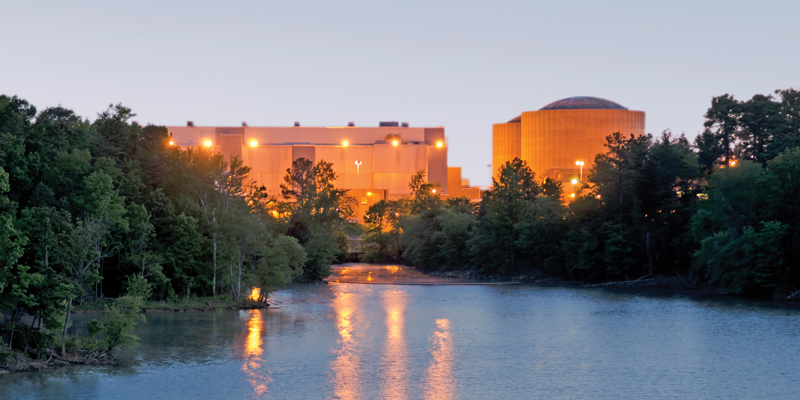
The only byproduct of nuclear power, other than steam, is spent fuel in the form of used uranium fuel rods. These are cooled in large pools for an average of 10 years before being transferred to 18-foot tall, long-term storage canisters, engineered to keep fuel safe without power or moving parts. All fuel used at Catawba since coming online in 1985 is still onsite.
While we’re keeping an eye on promising new nuclear technology, Catawba will continue to serve members of North Carolina’s electric cooperatives with steady, reliable power. Over the past 40 years, safety and security upgrades have kept its operations state-of-the-art, and it promises to continue to serve us for decades to come.
About the Author
Share Your Thoughts
Have a question about this story or just want to share what you thought? We’d love to hear from you!
More Nuclear


Safe, Sustainable Nuclear Power
Nuclear energy is key to a brighter future for electric co-op members