


Lenten rose, a winter wonder
Bloomless beauties: They are starving for nutrients! Regular waterings that include diluted doses (usually about one-quarter strength) of an African violet-formulated fertilizer will help sustain a bloom party.
Bloomless beauties (part two): Warmth and humidity are also keys to bountiful blossom displays. For warmth, place African violets in a room where temperatures are between 65–75 degrees. Humidity will be improved by setting the pots in shallow trays of pebbles partially filled with water, meaning the tops of the rocks should be dry.
Dot, dot, dot: No, not Morse code but rather spots on leaves, which can be caused by either cold water or chlorine. Pour water directly into the soil, not on the leaves, and let it warm up to room temperature before using. Having water sit out overnight allows chlorine — common in city water — to dissipate. Using room-temperature rainwater helps dash the dots, too.
Dot, dot, dot (part two): Too much exposure to sunlight will also besmirch the leaves with dark spots. If the sun is your African violets’ primary light source, it should only be indirect or filtered through a sheer screen.
The bends: Fertilizer salts that build up on the rims of pots can chemically burn leaves touching the residue and cause them to curl. To beat such bends, occasionally wipe the pot rims with a wet cloth.
The bends (part two): If your African violets’ leaves are drooping, it’s time for a drink. Not for you, but rather for your thirsty plants. Strong sunlight can also cause the foliage to curl.
Rot in a pot: Root rot is the result of too much soil muck. Only irrigate when the top of the dirt feels dry and don’t set pots in saucers that can trap water. Also, when you repot, use a loose, well-draining commercial African violet soil mix.
Tilt: When symmetry goes sideways on an African violet, it is usually the result of one side of the plant being exposed to its primary light source too long. Rotating the pot a quarter turn every two weeks will take care of this out-of-kilter condition.
Garden To-Do’s for February
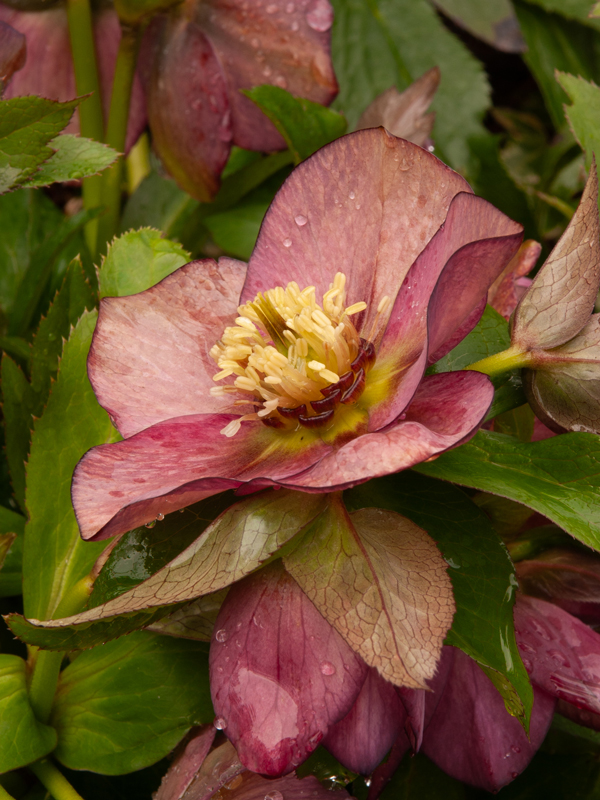
Lenten rose hellebores (Helleborus x hybridus) are winter-hardy wonders prodigiously producing displays of cute, colorful flowers that can last deep into the new spring. Even after their blossoms fade, these hellebores refuse to go away because they remain handsome 12-to 18-inch-high clumps of evergreen foliage through the whole year. They are tough beauties, too, being deer-resistant and performing well in areas of dry shade. As a bonus, happy hellebores readily reseed and establish ever-expanding green mounds of pretty plants.
- Large, showy ornamental grasses such as miscanthus, pampas, and pennisetum should be cut back before new growth begins. And if your beauties have become untidy brutes with neighboring plants, now is a good time to divide large clumps of these grasses.
- Keep the bird bath free of ice if a deep freeze settles in, and continue to wash and refill it at least once a week. Speaking of refills, the bird feeder should also remain well-stocked with seed and suet.
About the Author
Share Your Thoughts
Have a question about this story or just want to share what you thought? We’d love to hear from you!
More February gardening


