


Q: I use a well for drinking water at my home, but the smell and taste of the water have changed in recent years. I’m unsure about having the water tested, so I’ve been cooking and cleaning with it but not drinking it. Instead, I have been purchasing drinking water from the grocery store. Should I continue purchasing drinking water or are there better options?
A: Safe water is often taken for granted, but when our confidence waivers, fears about unsafe drinking water become the center of attention. If there are contaminants in the well water, washing (whether food, dishes, bodies or teeth) and cooking may still allow potentially harmful contaminants into our bodies.
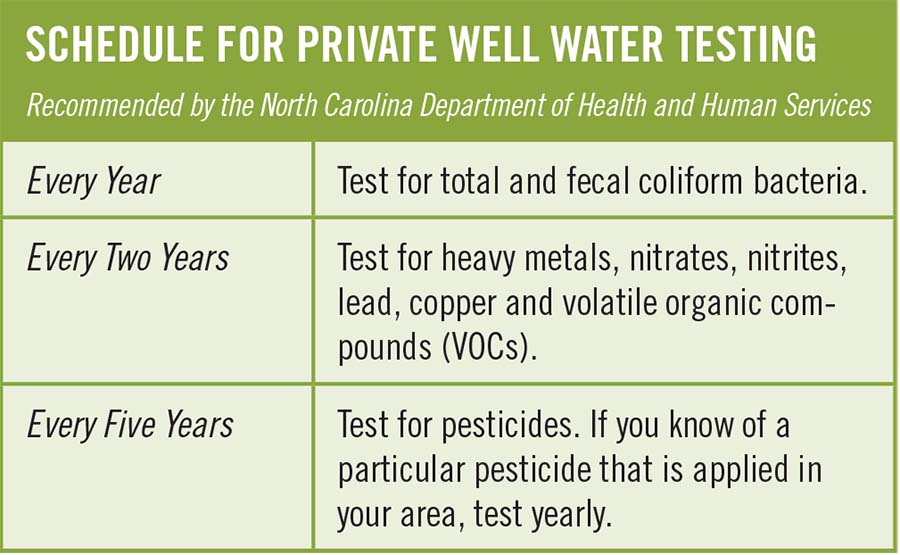
Thankfully, most private drinking wells in North Carolina provide clean, safe water, but being knowledgeable about their safety is a wise investment for our family’s long-term health.
Imagining the possible high cost and stress related to testing and filtering well water can be almost paralyzing. However, relying on drinking water from the grocery store can cost as much as $180 per person per year.
All private drinking wells are tested when they are installed, but routine testing is important because changes in the surrounding environment — even many miles away — can alter what is in the groundwater. Groundwater contaminants can come from natural sources and processes, such as eroding mineral deposits and groundwater flow changes, as well as human and animal sources, including construction and agricultural activity. While some contaminants can be noticed because they change the taste, smell, or appearance of the water, others may only be detectable through laboratory testing.
Having your well tested is relatively straightforward:
- Contact your county health department to schedule and pay for the inspection. The cost is slightly different in each county and will vary based on the type of testing you request. For example, well water testing from the Cabarrus County Health Department costs between $55 and $125, which is less than purchasing a year’s worth of grocery store drinking water. If the cost exceeds your household budget, ask if financial assistance is available.
- An inspector will visit your home to collect a water sample, or you will be asked to provide one.
- The results will be delivered by mail and include information about what is in your well water and whether additional treatment or filtration is required. Often, pamphlets with additional information are provided and inspectors are available to consult by phone.
- If additional water treatment is required, a second well water test will confirm that the treatment is working properly. Next month, we’ll explore the variety of treatment techniques and costs.
For more information about well water safety, visit:
• N.C. Division of Public Health, Department of Health and Human Services. Or call 919-707-5900.
• National Ground Water Association
About the Author
Share Your Thoughts
Have a question about this story or just want to share what you thought? We’d love to hear from you!
Related Stories
View All


