


Spray foam insulation can seal small air leaks in the attic.
Sealing and insulating your home to efficient levels can cut your heating and cooling costs by an average of 15 percent (sometimes much more), and make you more comfortable in your home.
Your attic is one of the first places to consider insulating because it is usually accessible and easy to inspect for air leaks and insulation levels. Insulation standards for new homes increased in 2012, and many homes built before then do not have the current recommended amount of attic insulation.
Insulation is graded by its “R-value” — the higher the R-value, the greater the insulating power. It depends on your home’s exact climate but for most southern climates, your attic should have a minimum grade of R-38, or about 13 –14 inches of insulation. For northern climates, R-49 is the minimum recommendation, or about 16 –18 inches of insulation.
Assessing need
As a general rule, if you can see the ceiling joists on the attic floor there is not enough insulation. Hiring a trained energy auditor is the best way to diagnose shortcomings with insulation. Check with your electric co-op to see if it offers energy audits or can refer you to a local energy auditor. Your co-op may also have information on rebates for adding attic insulation.
If you have determined that you need more attic insulation, assess your attic’s electric wiring. Are any wires visibly worn or degrading? Do you have knob and tube wiring? In either case, you will likely need to replace the wiring before proceeding.
Special considerations
If a “DIY” project interests you, you’ll need to do your homework. Installing insulation is messy, potentially dangerous and requires special equipment. Fortunately, there are many experienced insulation contractors you can hire.
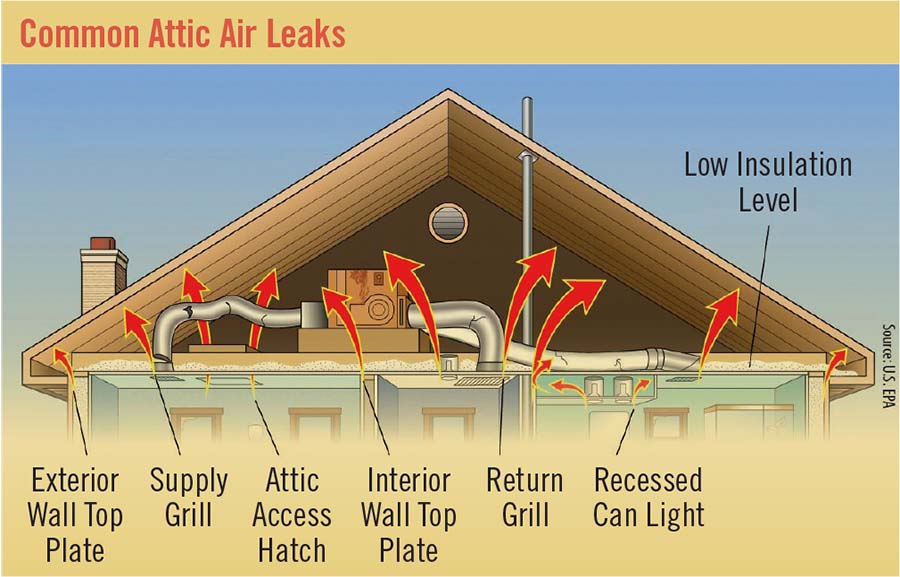
Be sure that you or your contractor seals any air leaks, such as around furnace flues and around any exposed air ducts in the attic. Air leaks can bring warm, moist air from your home into the attic, which can reduce insulation value and create mold. Also:
- Pay particular attention to your attic door or hatch. This entry point is a significant contributor to heat loss and heat gain.
- Make sure there is sufficient ventilation in the attic. Warmth and moisture can build up in an improperly ventilated attic, which can lead to roof problems.
It is usually not necessary to remove existing insulation unless it is wet, moldy or contains animal waste.
Types and material
There are two types of insulation for your attic floor: Batt/roll or blown-in/loose fill. Blown-in insulation requires special equipment to install, but it fills the space better than batt insulation, which can leave gaps and voids without careful cutting and placement around ceiling joists, vents and other attic impediments.
Insulation is most commonly made from fiberglass, cellulose or mineral wool. Many energy advisors recommend blown-in cellulose insulation due to its superior coverage, high R-value and air sealing abilities. Blown-in cellulose insulation is treated with boric acid, which acts as a fire retardant and insect repellent. Consult with your energy auditor or insulation contractor in choosing the type and material.
About the Author
Share Your Thoughts
Have a question about this story or just want to share what you thought? We’d love to hear from you!
Related Stories
View All
Managing Costs Across the Grid
Electric co-ops have an important advantage serving members with affordable, reliable power

Efficiency Saves on Bills and Brings Relief
An energy efficient home is a comfortable home

