


It was love at first sight when Air Force and Army veteran Jeff recently met his new service dog Carter.
This is just one example of how highly trained service dogs, like those provided by Canines for Service in Wilmington, help better the lives of the veterans they serve.
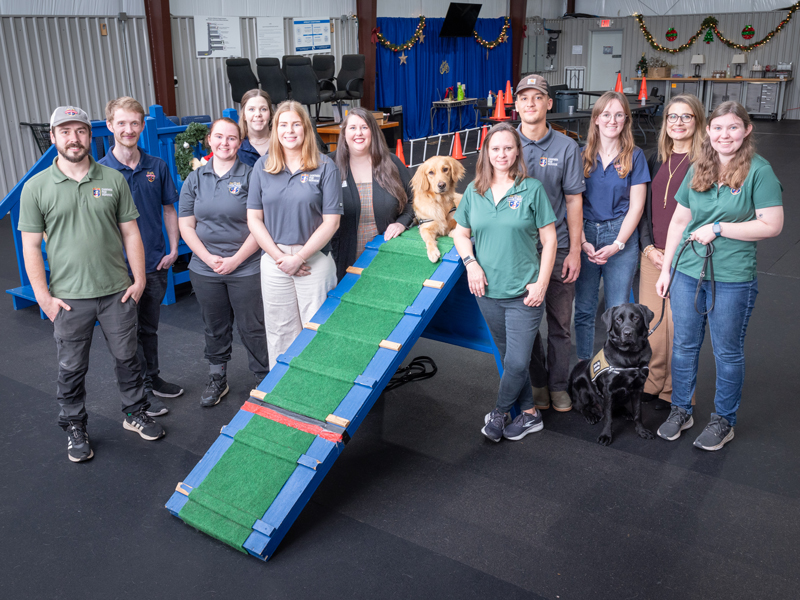
It began with an idea and a desire for canines to be seen as more than just companions. Canines for Service was founded in 1996, a nonprofit where dogs were not only friends, but healers, protectors and life-changers. What started as a small initiative blossomed into North Carolina’s longest-running, internationally accredited service dog provider, dedicated to transforming the lives of veterans through expertly trained service dogs.
“One of the most rewarding aspects of my role at Canines for Service is witnessing the moment a client is finally paired with their service dog,” says Development Coordinator Mary McArthur. “With an average wait time of nearly two years, the journey can often feel long and challenging, but the placement ceremony is a powerful reminder of why we do this work.”
From pups to life-changers
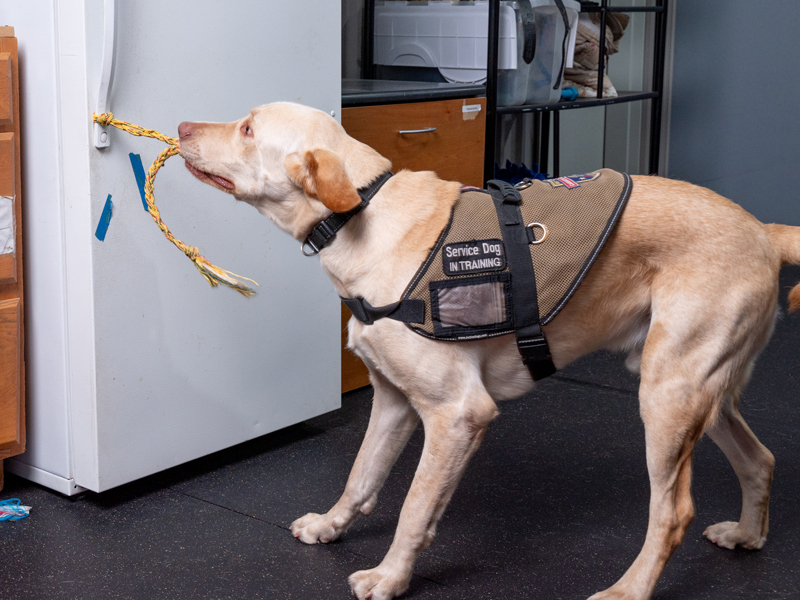
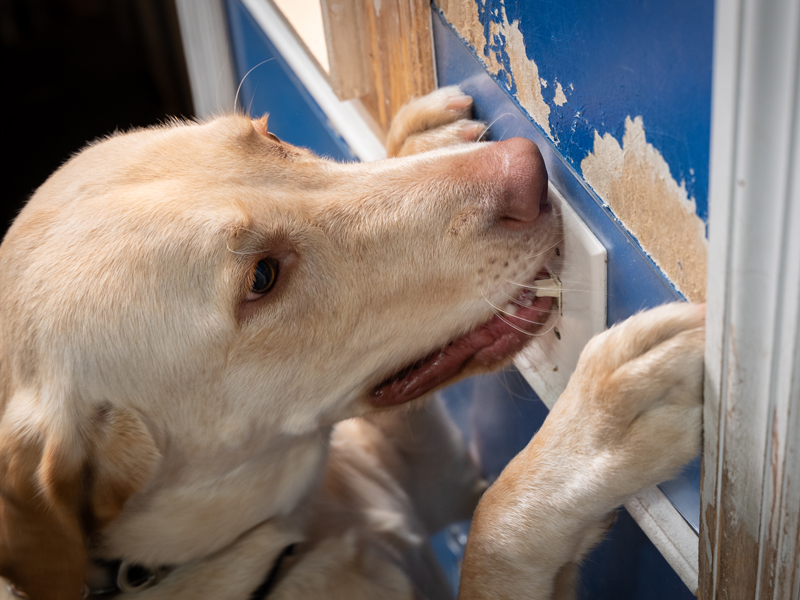
Service animals assist individuals with physical, mental or emotional disabilities by performing tasks that increase independence and safety at home and in public. For example, mobility assistance dogs can turn on lights, open refrigerators or position themselves to support transitions into chairs or beds. Emotional support animals comfort through companionship, while therapy animals visit health care facilities, assist with physical therapy or help keep patients safe. While both emotional and therapy animals are important, they are not trained to do specific life-assisting tasks like service animals, nor do they have the same public access rights.
“One of the most rewarding aspects of my role at Canines for Service is witnessing the moment a client is finally paired with their service dog.”
—Mary McArthur, Canines for Service
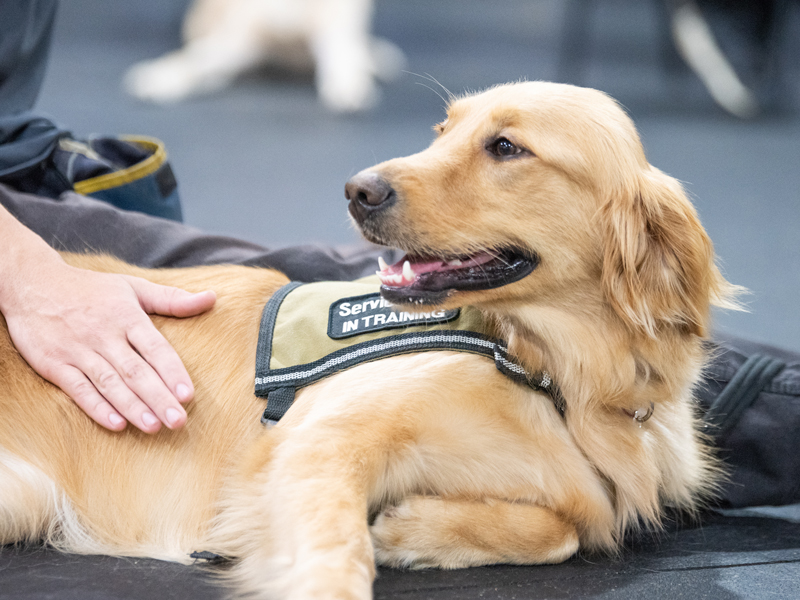
The journey of a service dog at Canines for Service begins with an excited eight-week-old puppy from a lineage of service companions, specially bred for their potential to serve. These pups live in foster homes to socialize and learn basic commands and etiquette. Once they reach eight months, they move to the nonprofit’s facility for up to 2,000 hours of specialized training. They master essential skills such as item retrieval, switching on and off lights and identifying anxious behaviors before moving on to specific tasks their future handlers will need. Trainers work with patience, love and purpose, shaping the dogs into dependable partners.
For veterans, these dogs are more than helpers — they’re lifelines. For someone suffering from nightmares, the service dog may gently wake them by applying calming pressure or turning on lights if touch isn’t welcome. Veterans who have experienced personal violation in the military may rely on their dogs to create personal space or guide them out of overwhelming situations. Some service dogs even learn to respond to medication reminders or signs of distress.
The training is intense, but the results are more than worth it.
Meeting a growing need
A shining example of the organization’s work is veteran Jeff and his service dog, Carter, one of Canines for Service’s most recent placements. It was love at first sight when the two met as Jeff proclaimed, “You are my new best friend, so you’re stuck with me for life!” He wasn’t kidding. The two bonded quickly, far beyond service duties, with Carter having an acute sense of awareness to take Jeff out of uncomfortable situations or helping to retrieve items due to numbness in Jeff’s hands. Carter also knows a thing or two about deep pressure therapy, which provides amazing relief to tight muscles.
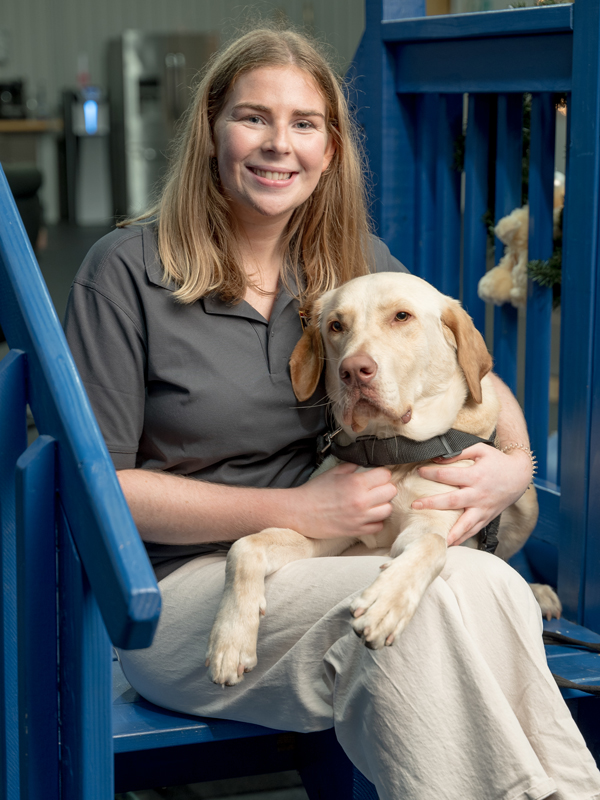
Canines for Service also offers a helping hand to those wanting to brighten someone’s day with their own companion. Its Canines for Therapy program provides training opportunities for personal pets to become therapy animals to give comfort in hospitals and care facilities.
The need for service dogs is greater than ever with Canines for Service seeing a 57% increase in applications between 2023 and 2024. While six specialized dogs were placed from 2023–2024 and another eight are projected to be placed by June 30 of this year, limited funding, resources and volunteers create challenges in meeting demand. Determined to provide service dogs and support at no cost, including travel and lodging expenses, the nonprofit relies heavily on donations, grants and community support to continue this life-changing work.
“The demand is not going away,” says Executive Director Bethany Leighton. “In response to this, Canines for Service will continue to seek out partnerships and funding to grow our programs. Our goal is to partner 50 service dogs with veterans over the next five years.”
The magic of Canines for Service lies in its stories of transformation — where struggles are met with unconditional love, and hope takes the shape of four paws and a wagging tail. As Mary puts it: “Seeing the pure joy and relief on our clients’ faces when they meet their service dog for the first time is truly unforgettable.”
Protecting the Integrity of Service Animals
Here’s how you can help:
Beware of red flags- Service animals are trained to assist, not to disrupt.
- While service animals are not legally required to wear vests or carry certificates, if someone claims to have a service animal and continuously emphasizes an ID, it could be a red flag.
- Do not confront the owner.
- Politely ask to speak to a store manager and explain the situation to them.
Business owners can visit bit.ly/ada-service to learn more about the rights and independence of those with assistance animals, as well as associated rights as a business. Advocating for legitimate service animals ensures fair treatment for all. Visit canine.org to learn more about service dog identification and service animal masquerading.
About the Author
Share Your Thoughts
Have a question about this story or just want to share what you thought? We’d love to hear from you!
For the love of dogs

EnergyUnited Funds Veteran Service Dog Training
Saving Grace K9s helps veterans through tough times

