


Flavorful herbal concoctions can season salads, fish and meats.
‘Tis the season of the mature herb garden, and now is the time to harvest culinary herbs to preserve the tastes of this summer’s special seasonings. You can, of course, dry these all-natural flavorings, but why not get creative and try your hand at making herb vinegars?
Tarragon vinegar is probably the most well-known herb vinegar, but other herbs such as dill, burnet, borage, mint, lemon thyme, lemon grass, fennel, basil, rosemary, chives, sweet marjoram and even tangy nasturtiums can also add their own distinctive, tasty flavorings to vinegar.
To start, harvest herbs early in the morning when their oils are more concentrated. After washing and patting them dry, add four ounces of fresh herbs to a quart of vinegar. (For a smoother flavor, use either red or white wine vinegar.) Pour into clean, clear glass bottles (plain or fancy) and close the tops tightly. Place in an indoor location not in direct sunlight and steep for two to three weeks. Occasionally shake the bottles to stir the contents.
After the mix has steeped, you can either leave the plant parts in the vinegar and use the concoction as is or strain the herbs from the flavored liquid with a paper coffee filter.
Don’t limit herb vinegars to just foliage. Cinnamon sticks, garlic cloves, peppercorns, chive blossoms, hot pepper pods and even citrus rinds can be dropped into the finished infusion to add eye-catching accents as well as their own unique flavor punches.
Need a few combination suggestions? Rosemary and white wine vinegar look and taste great by themselves, but add a dozen leaves of purple basil to tint the liquid a deep crimson and give the blend a snappier flavor. Red also rules in a mix of red wine vinegar, basil (any kind), oregano and thyme that makes a great salad dressing or marinade.
As decorations, bottles of herb vinegar can serve as pretty accessories for a few years. However, as edible accents to salads, fish and meats, to be safe they should be used within a year. Generally, the more herbs you add to the vinegar, the less acidic the solution becomes, so its ability to preserve the contents is diminished.
Tip of the Month
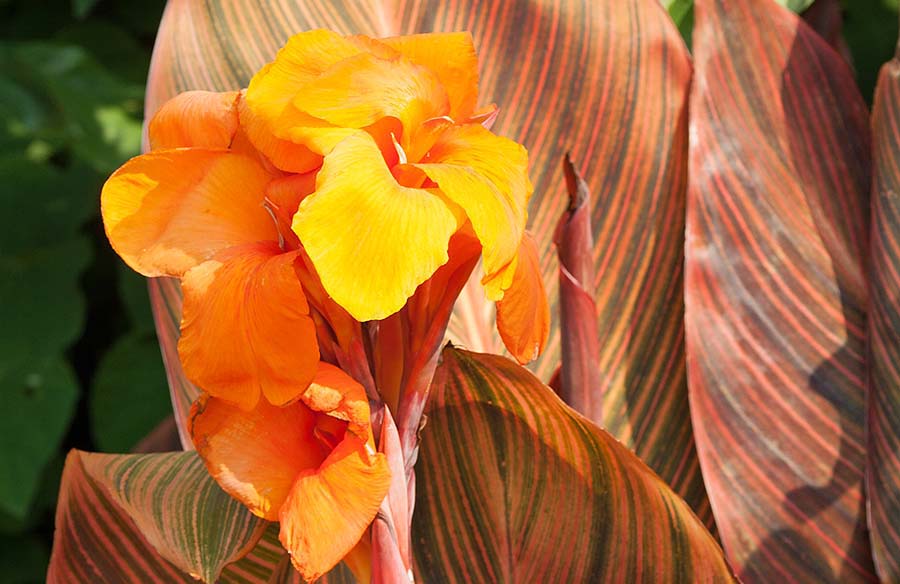
Container cannas? Sure. Whether from specimens such as “Tropicanna” and “African Sunset” that flash brilliant foliage, or fancy flowering selections like “Orange Punch” and “Minerva,” cannas in large pots can make for bold, bodacious summer and early fall shows on porches, decks and patios. Apply a liquid fertilizer solution once in August and again in early September to these heavy feeders. Also, be sure to water an outdoor canna container as frequently as once a day during extended hot, dry times. Finally, at the end of the growing season, examine the roots for excessive container wrap, and divide the rhizomes or move the plant to a bigger pot, if necessary.
Garden To Do’s
August
- There is still time to squeeze more produce out of the veggie patch by adding fast-maturing plants such as eggplants, peppers, squash, cucumbers and tomatoes early this month.
- Cool-season vegetables such as collards, broccoli, cauliflower, lettuce and spinach can also be started now from seed in flats in a shady location.
- This month, Bermuda grass lawns will benefit from an application of one pound of nitrogen per thousand square feet. Also, zoysia and St. Augustine lawns can be fertilized now with one half pound of nitrogen per thousand square feet.
September
- Add even more colorful appeal to the fall flower garden by including eye-catching plants such as calendulas, asters, dusty millers, ornamental kales, flowering cabbages and pansies.
- While the leaves are still on your woody ornamentals, look for dead, diseased or damaged limbs and prune them off.
- Keep the bird feeder well stocked because activity will increase with the coming of fall. Continue cleaning out the bird bath and adding fresh water weekly.
About the Author
Share Your Thoughts
Have a question about this story or just want to share what you thought? We’d love to hear from you!
Related Stories
View All


