


‘Nona’s Garnet Spider’ Daylily M SEV DIP EXT
EE — Extra Early
A bloom period indicator, EE defines daylilies that are the first to flower in the spring. This eager starter is followed by E (Early), EM (Early Midseason), M (Midseason), LM (Late Midseason), L (Late) and VL (Very Late) daylilies. Obviously, selecting a wide range of these time travelers can extend the pleasure of a daylily garden for months.
RE — Rebloom
Such daylilies have a fabulous first flush of flowers, and then do it again with a second or continuing show. For the best displays, they need a little help in the form of deadheading, additional fertilizer and regular waterings when the rains don’t come.
EV — Evergreen
These daylilies remain stubbornly in foliage through typical North Carolina winters. One step down, an SEV selection is semi-evergreen, meaning it might retain its leaves in a mild winter but probably won’t if temperatures turn abominably cold. And no matter what the winter is like, a DOR (Dormant) daylily will lose its foliage after the first autumn frosts. It is a good idea to mark the locations of SEV and DOR daylilies before the growing season winds down so they won’t be dug up during the planting frenzy to come the following spring.
FR — Fragrant
Some daylilies are sweetly scented in perfumed pleasures that can range from a slightest of slight lovely smells to obvious olfactory awakenings. Daylilies that are deemed to be intensely aromatic are occasionally tagged VFR — (Very Fragrant).
TET — Tetraploid
There are two types of daylilies, tetraploids and diploids (DIP), with tetraploids having twice the sets of chromosomes versus diploids. Without wading deep into DNA gobbledygook, TET cultivars tend to have larger flowers with brighter colors supported on stronger stems. This doesn’t mean diploids are visual wimps: among their ranks are some of the prettiest pinks, as well as many of the more popular spider and double-flowered daylilies.
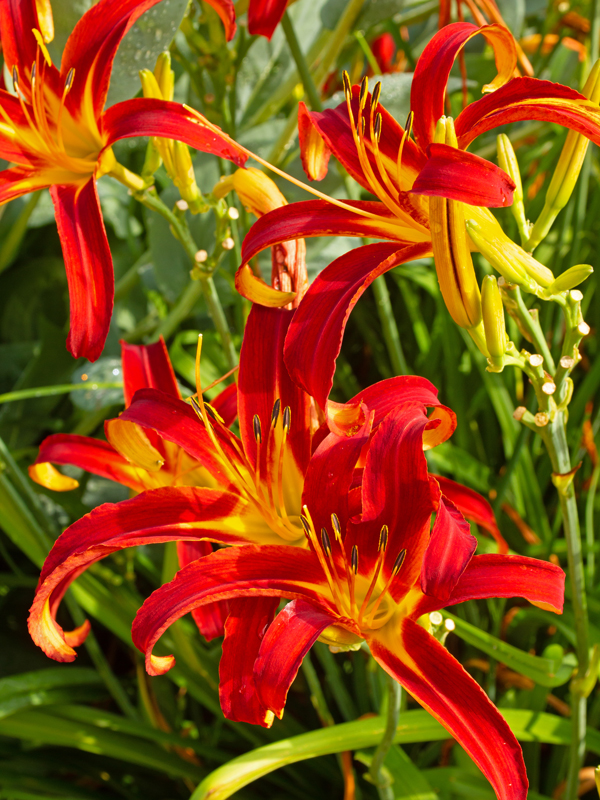
‘Forty Carats’ Daylily M DOR TET EXT
Garden To-Do’s for March
Night-blooming daylilies? You bet. They even have their own special codes! NOC is for Nocturnal daylilies, a delightfully strange group that blooms late in the day and persists through the night. Some Nocturnal daylilies flaunt their flowers well into the new dawn, meaning they remain enjoyable sights to see as you stroll in the garden with your morning coffee. Extended (EXT) represents a large group that opens like regular daylilies — in the morning — but stay in bloom for 16 hours or more, way past normal daylilies’ bedtime at sunset.
- If you are anxious to get your spring veggie patch growing, this month is a good time to plant asparagus, carrots, cabbage, Swiss chard, kale, lettuce, mustard greens, onions, potatoes, turnips, spinach, rutabagas and/or radishes in gardens across the state.
- For dependable, extended service, change the oil in your lawn mower about every two years. It’s an easy chore, but if you aren’t mechanically inclined, your local, friendly small engine repair shop can do the deed.
About the Author
Share Your Thoughts
Have a question about this story or just want to share what you thought? We’d love to hear from you!
More March gardens


