


Ginger lily is a blooming beauty.
Well, I don’t mind being patient with these pretties because when ginger lilies finally do bloom, it’s a doozy of a show. The plants themselves are tropical-looking treats ranging from 3 to 6 feet tall with large, blade-shaped leaves that can stretch up to 2 feet long and about 6 inches wide. Their flower parade is an extended progression of small orchid-like, fragrant blooms with extra-long stamens on clustered stems.
For maximum visual pleasure from a ginger lily flower-fest, this beauty needs plenty of sun. However, since it is not a trooper when it comes to dry conditions typical in sunny sites, soil preparation is important to help conserve ground moisture. So, mix in gobs of homemade compost or a quality commercial topsoil — enough to actually raise the planting bed. This will help improve drainage and prevent mucky conditions, which is a perfect playground for rhizome rot.
Mulch will, of course, also help even out soil moisture. Compost is a great organic ground cover to use because it can also slowly feed nutrients into the soil. This is important because, while ginger lilies are pretty, they are pigs when it comes to nutrients. If you don’t use compost for mulch, a low-nitrogen, time-release or organic fertilizer will help feed their needs.
As far as ginger lily choices go, there are enough to make your head spin. The white ginger lily (Hedychium coronarium), a fairly easy find, shines with perfumed, pale flowers. Want more bling? Many common Hedychium coccineum cultivars oblige with upright, spiked racemes bedecked in blooms ranging from yellow to orange to reddish hues. Want even more bling? Add variegated foliage to the eye candy with picks such as “Dr. Moy,” “Tahitian Flame,” or “Vanilla Ice.”
Long column short: Ginger lilies come in a wide range of pretty, so paying attention to their water and nutrient needs will make them showstoppers in the summer garden — and well worth the wait.
Garden To-Do’s for April
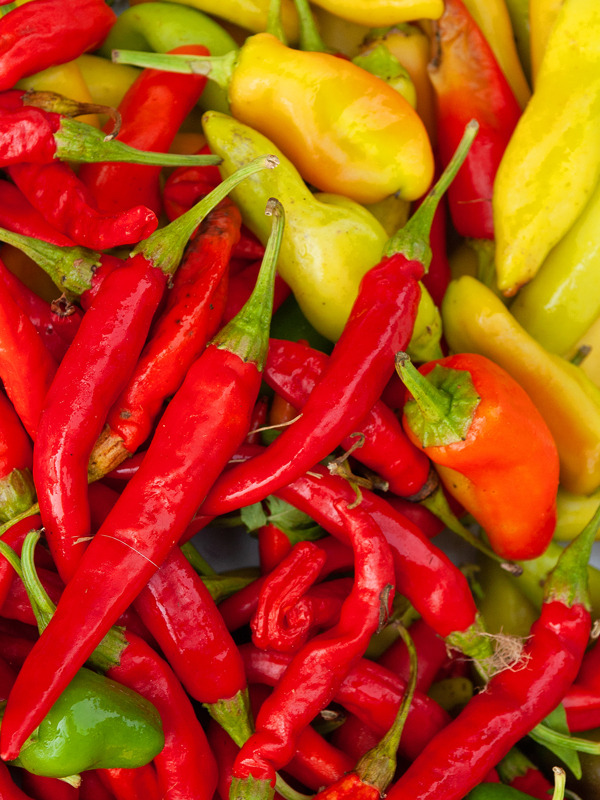
Plant peppers this month for an abundant summer harvest.
The spring weather is warming nicely now, but if you are itching to start your summer veggie patch, remember, soil temperatures are very important, too. And since ground temps take more time to rise, Piedmont and Coastal gardeners should probably hold off planting lima beans, cucumbers, snap beans, peppers, squash and tomatoes until the middle of this month, while growers in the western part of the state need to wait until at least the end of April. Also, since they are true heat lovers, I usually hold off on planting okra, pumpkins, eggplant and watermelons until May.
- Houseplants outside for a summer vacation? Keep them in light shade so intense sun rays won’t burn tender foliage. Also, use a diluted solution of liquid fertilizer instead of granular nutrients because moisture in potted plantings quickly evaporates in the great outdoors, and dry fertilizer in dry soil is root burn waiting to happen.
- Regular rains are, of course, beneficial to any garden, but how do you know when Mother Nature provides too little, or even too much? Invest in a simple rain gauge and an easy-to-use soil moisture meter to help fine-tune your garden’s irrigation needs.
About the Author
Share Your Thoughts
Have a question about this story or just want to share what you thought? We’d love to hear from you!
More April gardens


