


Photo by Laura Shachmut
Photo by Laura Shachmut
One possible cause of this positive impact is the increased physical activity usually seen on the part of dog owners.
“We all have patients whose only exercise is that they have to get up to walk the dog three times a day,” Blecher says.
The same AHA statement cautioned, however, that while getting a pet might be a “reasonable” recommendation in some cases, “pet adoption, rescue or purchase should not be done for the primary purpose of reducing CVD risk.” That’s in part because not all situations are the same.
“Individual variation in people, animals and different contexts likely all matter. And so far, it seems as though the quality of the relationship matters,” says Meagan Mueller, Ph.D., a research assistant professor at Tufts University Cummings School of Veterinary Medicine and associate director of the Tufts Institute for Human-Animal Interaction. “A positive, mutually beneficial relationship with a pet is probably going to be associated with more positive outcomes.”
Patients are usually aware of the possible physical downsides of living with pets, Blecher explains. They know that pregnant woman shouldn’t handle cat litter, for example, because of the risk of birth defects from toxoplasmosis, and they know that animal bites and scratches should be treated immediately to prevent infection. They also know that sniffling, sneezing and other allergic responses to pets can create misery for sensitive household members.
But other health benefits of sharing a home with a companion animal, however, are often overlooked, or in many cases are just now coming to light. For example, while some pets may act as allergens, investigators are learning that pediatric exposure to animals might actually prevent allergies later in life.
“Kids exposed to pets early on in life have fewer allergies and pulmonary disorders like asthma. It ends up being a beneficial thing. It primes the immune system. It’s similar to the concept of immunotherapy, or allergy shots,” Blecher says, citing two recently published Swedish studies.
The truth about cats
Much of the research surrounding the benefits of pet ownership focuses on dogs, but where do our favorite feline companions fit in the mix?
It’s something of a myth that cats are less trainable than dogs, Tedeschi says. They can be trained through positive reinforcement, “often in the very same ways that dogs can be trained — but we have different expectations for them.”
Cats can, in fact, learn to participate in our lives much like other companion animals can be trained to do — if you are committed to it, he advises. “You have to be consistent. And most cat owners aren’t,” Tedeschi says. “Most cat owners have a funny, almost roommate-like relationship with their cats, where they love each other but they have habits that drive each other crazy.”
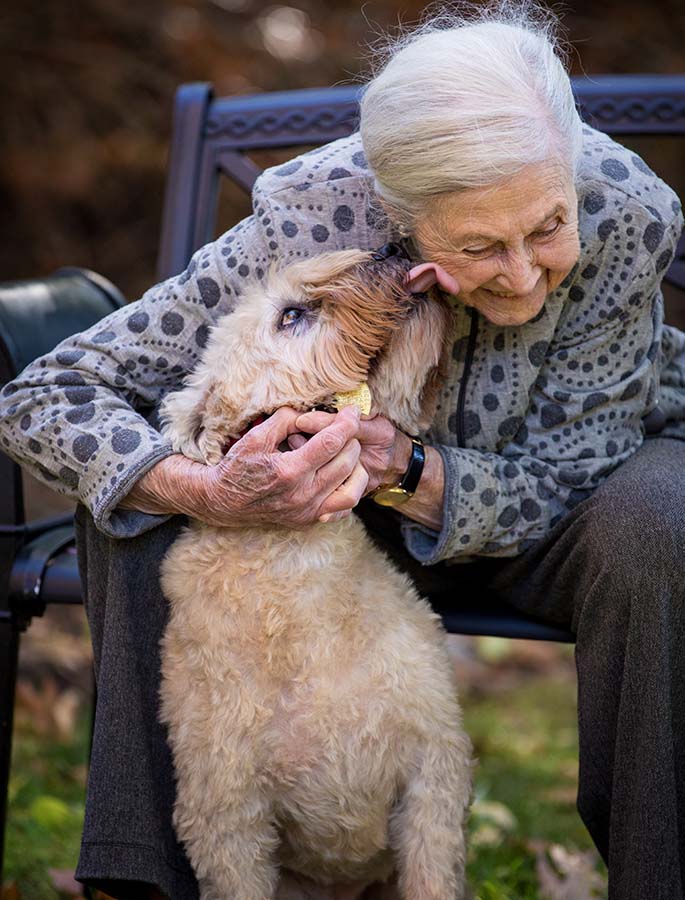
Photo by Laura Shachmut
There are programs incorporating cats that teach them to walk on leashes, play games, do obstacle courses, fetch things, and interact with and respond to people in helpful ways, Tedeschi explains. Cats also offer tremendous opportunities for people with minimal space, or minimal access to the outdoors — for example, someone who is housebound or unable to leave home frequently.
And one clinical intervention for PTSD teaches people experiencing hypervigilance to observe their own animals: A role perfect for cats. Cats are fantastic for this, according to Tedeschi, because they are very sensitive to their environments. This allows somebody to form a second opinion about whether there’s an actual risk or not and begin to regain control of their own startle reflexes.
Making connections
Understanding the different types of people and pets that could help each other most is an area where we need more research in human-animal interaction, according to Mueller. One of the major unanswered questions is determining under what circumstances pet ownership is beneficial.
At Pamlico Correctional Institution, those benefits are clear, and the relationships between inmates and dogs are clicking.
“A lot of these guys have no self-worth — there are no ‘warm fuzzies’ allowed in a prison,” PAWS’ Schmidt explains. “But now they have an animal they can love. I’ve seen a lot of them turn their lives around.”
About the Author
Share Your Thoughts
Have a question about this story or just want to share what you thought? We’d love to hear from you!
Related Stories
View All

Trailblazing New Opportunities
McDowell Tech’s Trail School is a blueprint for building the outdoor economy

Farm Fresh in WNC
Yadkin and Wilkes county farms offer something for everyone year-round
