


The Lenten Rose is tough and grows readily in areas of dry shade. Its blooms start in the dead of winter and can last deep into the spring.
But not all hellebores are created equal. In fact, there are several species suitable for Carolina landscapes, and each can add their own special brand of pretty to the winter garden. Below are four such hellebores that can typically be bought from local and online nurseries.
Corsican Hellebore (Helleborus argutifolius). A beauty worth growing for its interesting gray-green, coarsely spined foliage alone, but an extra bonus is its candelabra-like clusters of creamy green blooms that usually emerge in February. Each flowering stem can display 20 or more blooms. This large hellebore can be burned by dry winter winds, but a temporary burlap cover will normally get it through the worst of a severe cold snap.
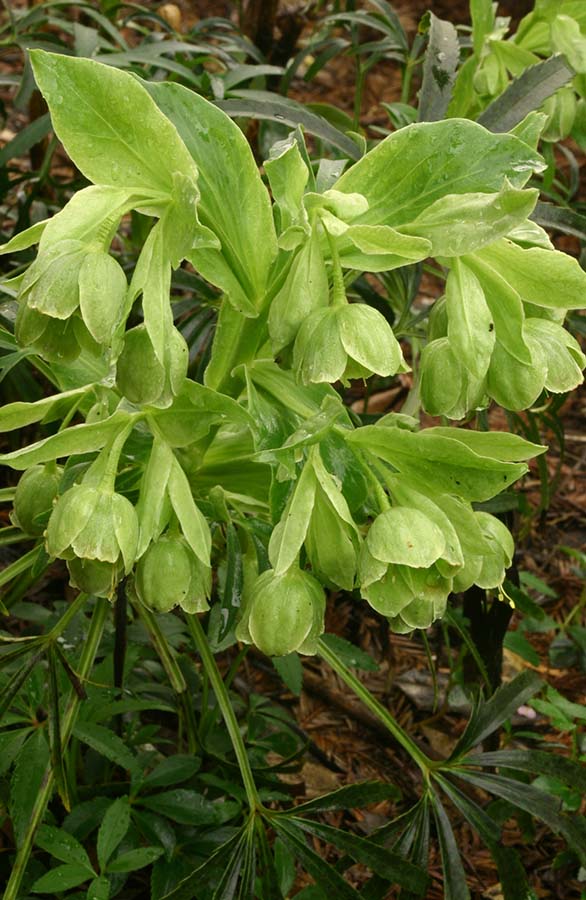
The bear claw hellebore flowers January through spring. Mid-green leaves form a clump up to 3 feet wide and 30 inches tall.
Tip of the Month
Hellebores readily reseed, meaning there is ample opportunity to have even more of these dependable plants. Sprouting from seeds, this second generation might not be exact copies of their parents, especially if they are cultivars, but, being hellebores, chances are good they are still going to be pretty.
The best time to transplant seedlings is in the late winter or early spring. Move the young plants when they have their first set of true leaves. Also, their roots can easily reach 6 to 8 inches down, so, when digging up the baby plants, dig deep. Then, have patience. Hellebores can take up to three years to mature enough to begin producing flowers, but their cheerful cold weather blooms are worth the wait!
Bear Claw Hellebore (H. foetidus). Another hellebore that likes to flaunt masses of greenish colored blooms, this species will usually begin flowering in January and continue showing off until the spring. The mid-green leaves are finely divided, providing plenty of winter interest by themselves. It forms an impressive clump that can be up to 3 feet wide and 30 inches tall. Bear Claw Hellebores tend to peak after three years, but they reseed easily, so there will always be fresh young plants to carry on the flower show.
Christmas Rose (H. niger). This hellebore can be fussy in dense, acidic soils, but properly preparing the growing ground with amendments at planting time and also taking steps to raise the soil’s pH close to neutral will go a long way to making this beauty feel at home in a Carolina garden. In addition, there are less finicky selections that originated in the South, and one to look for is the hardy, vigorous ‘Nell Lewis.’
A happy Christmas rose might actually bloom around Christmas, but in this region, it will more likely start putting on its show in January, as white, 2- to 3-inch diameter flowers emerge from 12-by-12-inch clumps of leathery, deep green leaves.
Lenten Rose (H. x hybridus). This is the belle of the hellebore ball. The Lenten rose is tough, readily growing in areas of dry shade, but the beauty of its blooms, which start in the dead of winter and can last deep into the spring, is the main selling point of this plant. And when it comes to variations in hues, the large selection of cultivars provides a cold weather rainbow of bluish purple, light green, pink, cream, light yellow and white blossoms. Additional colors, as well as color combinations, are sure to be developed for years to come because the Lenten Rose has caught the creative imagination of many professional hybridizers, so count on many more eye-catching introductions in the future to help turn your garden into a botanical winter wonderland.
Garden To Do’s
- Now is not too soon to begin battling bad bugs outside — a dormant oil spray on branches and trunks to smother overwintering eggs and larvae of such pests as aphids, scale and mites is a good way to help curb spring and summer outbreaks on susceptible ornamental and fruit trees. Just remember that it is better to spray on a day when the temperature is expected to remain above 40 degrees F.
- Keep the spent blooms of camellias raked up to discourage camellia petal blight, which turns flowers an ugly brown. Since this is a soil-borne disease, do not compost the fallen petals.
- If you brought any plants indoors for the winter, keep watch on them for pest proliferation. In the cozy confines of a house, the dry heat can make such undesirables as mealy bugs, white flies and spider mites want to come out and play.
- Keep the bird bath free of ice during the severely cold times and continue to add fresh water each week. The bird feeder should also, of course, remain stocked, but occasionally include a chunk of suet, the avian energy bar that helps your feathered friends ward off the worst chills of winter.
About the Author
Share Your Thoughts
Have a question about this story or just want to share what you thought? We’d love to hear from you!
Related Stories
View All


