


Photo courtesy of NCWRC
A closer look
Eastern box turtles are terrestrial reptiles native to the eastern United States. Its most distinctive feature is its high-domed shell, called a carapace, which is adorned with vibrant patterns ranging from yellow, orange, red and brown, making it resemble a stained-glass window. This colorful shell provides excellent camouflage among the forest floor’s dappled sunlight and fallen leaves, and like other box turtles, has the ability to close completely to protect against predators.
Life in the leaf litter
Eastern box turtles prefer deciduous or mixed forests with plenty of underbrush and leaf litter for cover, though they will inhabit moist environments during hot or dry weather. Their diet is omnivorous and highly varied, ranging from insects and worms to berries, fungi and even carrion. This diet is key for forest health, as eastern box turtles help control insect populations and disperse seeds through their droppings. The dietary flexibility is also a vital part of their survival, as they can live for several decades, with a few individuals even surpassing 100 years.
Symbolism and folklore
Many stories and legends exist about turtles in general, portraying them as wise and ancient creatures that embody the spirit of nature. They hold a cherished place in many Native American cultures. They are seen as a symbol of patience, perseverance and the steadfast passage of time. In some creation myths, the Earth itself is said to rest on the back of a giant turtle. Turtles are also often considered the keepers of knowledge in Cherokee folklore, and in some stories, land was created by soil found on a turtle’s foot.
Picturing the eastern box turtle navigating the intricacies of its leafy domain, it becomes clear why these creatures are so revered. They are not just survivors. They are integral parts of the ecosystems they inhabit; living jewels that remind us of the resilience and beauty of nature.
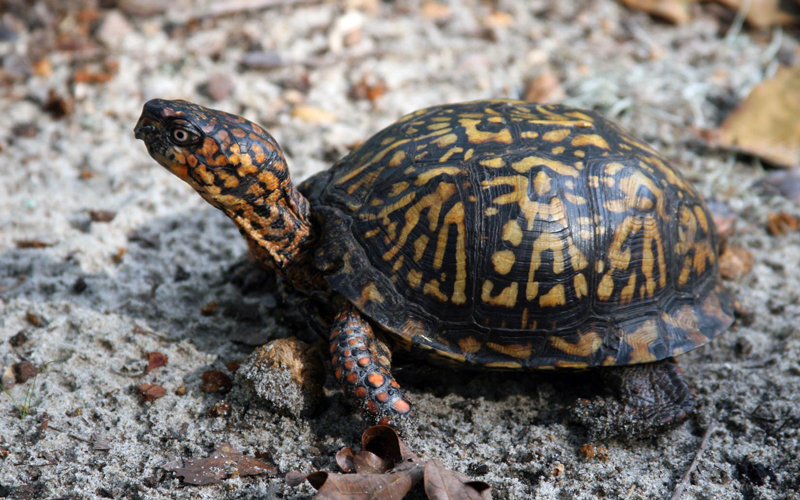
Photo courtesy of NCWRC/Jeff Hall
Eastern Box Turtle Facts
- North Carolina made the eastern box turtle our official state reptile in 1979.
- Eastern box turtles have a homing instinct, often returning to the same area where they were born — even after being relocated miles away.
- The colors and patterns on an eastern box turtle’s shell are as unique as a human fingerprint, making it possible to identify individuals based on shell markings.
- Eastern box turtles can be found everywhere in North Carolina, including along the Outer Banks.
- They are declining in number due to habitat loss, slow maturation, low birth rate and a tendency to get hit by cars, making it more important than ever to protect and conserve.
About the Author
Share Your Thoughts
Have a question about this story or just want to share what you thought? We’d love to hear from you!
Learn more about Carolina wildlife

Truth or Fiction: Top Misconceptions About Snakes
Are snakes as scary as we make them seem?

Keeping Wildlife Wild
Attract and enjoy watching animals while helping them remain wild

Living with Black Bears
A thriving NC bear population makes it more likely your paths will cross