


Bundles of freshly harvested mint, chives, and basil ready for drying — or freezing.
Well, if you don’t want to wear out the welcome of what you reaped after you sowed (nor incite a domestic revolt at dinner time) reduce the use by simply preserving garden-grown herbs to s-t-r-e-t-c-h out your supply into the fall and even winter when the garden sleeps.
And it is very easy to do — as easy as finely cutting up some of your favorite edible herbs, sprinkling them into ice cube trays and adding water. After they freeze, tuck the cubes into airtight sealable bags so they won’t be besmirched with that nasty freezer taste. Then, when you think a soup or stew could benefit from some extra zing, simply toss in a few cubes.
Want even simpler? Skip the ice cubes, and just wash and freeze sprigs of herbs such as chives, dill, fennel, tarragon, parsley or basil in sealable bags. These flavorful stems can then be cut up and used as needed to add pizzazz to salads, side dishes or even main course meats.
Drying herbs has been a time-honored tradition for many gardeners because it is also, well, easy. Just harvest sprigs of your favorite herbs, wash them, and pat dry. Then, hang in small bunches upside down in a warm indoor spot away from direct sunlight. In a few weeks, they should be brittle enough to take down and store in sealable bags or airtight jars. Place in a cool, dark kitchen cabinet or food closet to help prevent flavor fade.
Don’t want to turn your kitchen or den into an inverted forest? After harvesting and washing, put the herbs (with or without stems) between two paper towels and nuke ‘em in the microwave at full power in 30 second bursts, turning the towel packs over after each session and checking the herbs until they are crunchy dry. Then, tuck them away in airtight containers to await their contributions to future culinary creations.
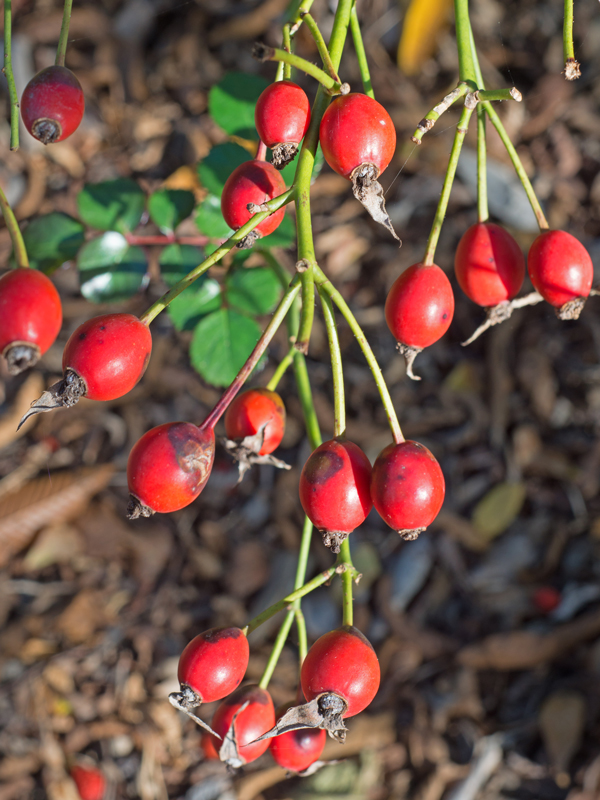
Yes, rose hips are edible.
Garden To-Do’s for August
Did you know rose hips are not only edible, but they are also nutritious, packed with vitamin C and antioxidants? Rose hips are the seed pods that develop after rose blooms fade. Flowers are typically trimmed to prevent plant energy from being diverted to such seed production, but if you are curious about how processed hips could add zesty snap to sauces, jellies, syrups or teas, let a few clusters that haven’t been treated with pesticides mature and then harvest them after the first light frosts of autumn for your kitchen experiments. Want to be up to your hips in, well, hips? Plant Rugosa rose cultivars — they are champs at delivering impressive harvests of plump fruits.
-
Unless you are tidying up diseased or broken branches on woody ornamentals, tuck your pruning tools away for the year. Any snipping or clipping done now, with the growing season soon to be on the wane, can stimulate new growth that might not have time to harden off if any killing cold spells come early.
-
To stimulate maximum production from summer veggies such as okra, green beans, squash, cucumbers, and indeterminate tomatoes, continue harvesting these garden goodies at least once or twice a week.
About the Author
Share Your Thoughts
Have a question about this story or just want to share what you thought? We’d love to hear from you!
More August gardening


