


You can find “Yellow Queen” shrimp plant at local nurseries.
As advertised, shrimp plant’s flowing flowers look like a seafood restaurant’s all-you-can-eat special, with tapering, curved, conical rows of overlapping bracts forming launch pads for small, white, tube-shaped blossoms (which, by the way, are butterfly and hummingbird magnets). The species selection of shrimp plant has a rust-red coloration, much like the tint of boiled shrimp.
Following the success of the original reddish shrimp plant, other dazzlers were introduced, including the popular cultivar “Yellow Queen,” which is hard to miss with its blazing yellow bracts. And deep from the quirky corner comes “Fruit Cocktail” with short bracts resembling small, butter-yellow fish waving ruby red flower-hands. No kidding.
Depending on the selection, a happy shrimp plant can stretch three to almost five feet tall. The key to keeping it festooned with blooms in summer is to choose a planting site that has fertile, well-worked soil and receives sun most of the day with some shading later in the afternoon. Shrimp plants can tolerate drought, but will look better if they are mulched and watered once to twice a week during extended dry spells.

“Fruit Cocktail” may be harder to find locally.
Shrimp plant is a tropical perennial from Mexico typically treated as an annual in Carolina Country, but this doesn’t mean you have to wave bye-bye to your botanical babies when the first frosts of fall bite. I’ve successfully overwintered potted shrimp plants indoors in a sunny southern window by trimming them way back (to save space), watering sparingly over the coldest months and misting the leaves occasionally.
Even garden-ground shrimp plants can live again via cuttings taken in the late summer and propagated inside over winter using rooting hormone powder and a moist, sterile growing medium such as perlite or vermiculite.
You can find the reddish species shrimp plant, as well as “Yellow Queen,” at area nurseries . “Fruit Cocktail” might be a little harder to find locally, but go online, with Logee’s Greenhouses being a good place to start e-fishin’
Garden To-Do’s for May
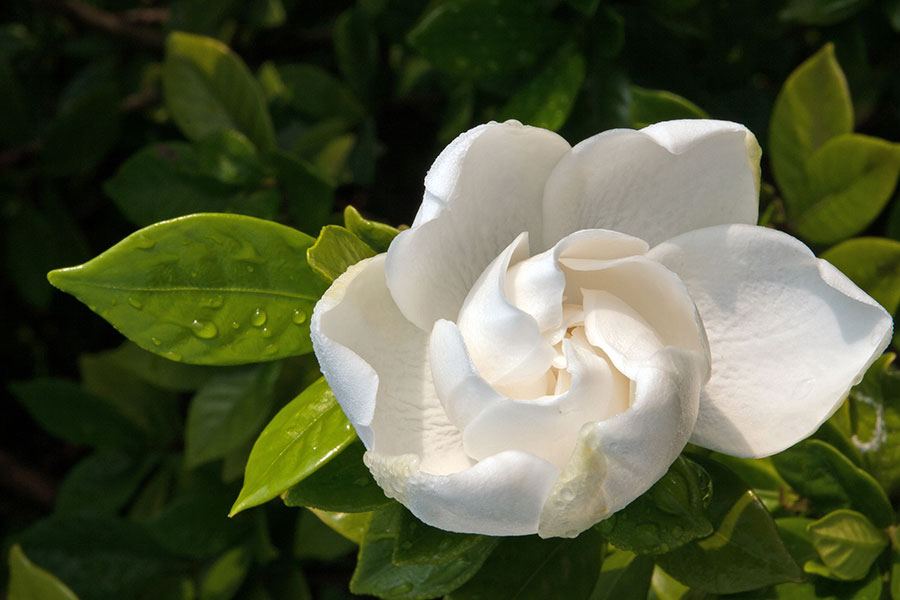
- If adding a sweet-smelling gardenia to the garden is on your to-do list this spring, here are a few quick tips: (1) Plant in a partially sunny location or at least in a spot that receives only morning sun; (2) pick a fertile, well-worked site that, to help prevent root rot, has good drainage; and (3) add extra nutrients at planting time by applying an acidic, well-balanced, time-release fertilizer like the ones specialized for azaleas and camellias. Also, from the Piedmont west, consider hardy cultivars such as “Chuck Hayes,” “Kleim’s Hardy” and “Frost Proof” that are better at toughing out nasty winters.
- Cool-season edibles such as collards, broccoli, lettuce kale and spinach have all had their day in the vegetable patch this spring. However, with temperatures on the rise, they are beginning to look bad — and taste worse — so pull up spent and bolting plants to make room for heat-seeking summer veggies.
- Watch for fire blight on susceptible plants such as pyracantha, apple, quince, raspberry, cotoneaster, pear and blackberry. This dastardly disease blackens and shrivels new growth. Any afflicted limb ends should be pruned off to prevent the blight from spreading to other branches.
About the Author
Share Your Thoughts
Have a question about this story or just want to share what you thought? We’d love to hear from you!
Bringing May flowers

Enjoy Tender Greens in Summer Heat with Climbing Spinach
Plus Garden To-Do’s for May

