


Halifax EMC’s utility-scale solar + storage project is the first of its kind to be deployed by North Carolina’s electric cooperatives.
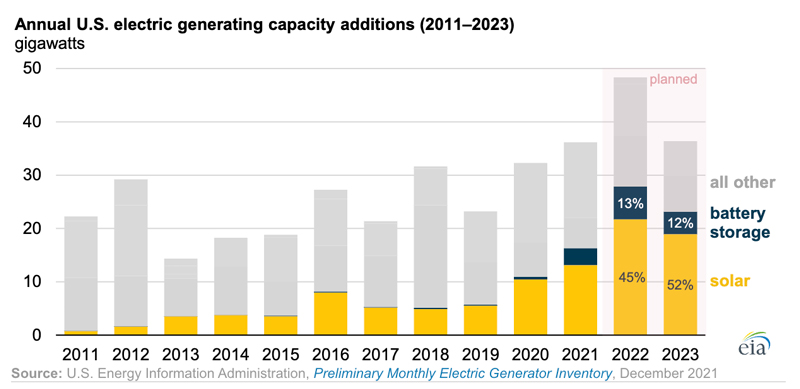
From 2022 to 2023, electric utilities plan to add 85 gigawatts (GW) of new generation capacity to the U.S. power grid. Sixty percent (51 GW) will be made up of solar power and battery storage projects, according to the U.S. Energy Information Administration (EIA).
“With this [solar + storage] project, we are capturing a renewable resource when it’s most abundant, storing it and discharging it exactly when it’s needed — there’s a lot of potential here.”
“Solar energy is most abundant during the middle of the day, but demand peaks in the late afternoon hours in the summer and early in the morning during winter,” said Jimmy Wilkins, vice president of Portfolio and Resource Optimization for North Carolina’s Electric Cooperatives. “With this [solar + storage] project, we are capturing a renewable resource when it’s most abundant, storing it and discharging it exactly when it’s needed — there’s a lot of potential here.”
Of the total planned U.S. capacity, utility-scale solar accounts for 41 GW. New battery storage capacity, which can help make power grids more resilient and reliable, accounts for 10 GW. In North Carolina, electric cooperatives are deploying utility scale batteries at 10 sites around the state to provide 40 MW of power
The remainder of planned U.S. capacity additions over the next two years will largely come from natural gas (16 GW) and wind (15 GW).
“The amount of planned wind capacity dropped by nearly half from the previous two years, which had 29 GW of new wind capacity come online,” EIA said.
Share Your Thoughts
Have a question about this story or just want to share what you thought? We’d love to hear from you!
More on solar and batteries

Halifax EMC Solar + Storage Project Marks NC Milestone
Array is the first of its kind to be deployed by North Carolina’s electric cooperatives

Electric Co-ops To Deploy Batteries Across Rural NC
Energy storage will enhance grid resilience, reliability
