


Your electric co-op may be able to provide an energy audit to help determine if a heat pump is a good solution for your home. Photo courtesy of Piedmont EMC.
Heat pumps are typically much more efficient than electric resistance systems and can be a solid solution in a wide variety of circumstances. They can be the right choice in a manufactured home, a construction addition or as a replacement for a broken or inefficient HVAC system. They’re also becoming more popular for central heating in new construction.
But what are heat pumps, and how do they work in each case?
Electric baseboard heaters can be replaced with what’s called a ductless mini-split heat pump system. This is a good solution because older baseboard heaters are typically inefficient. The mini-split system has a compressor outside that is connected with refrigerant lines to the blowers inside. A ductless system can serve up to four zones, so it can heat a small home or can be used in combination with another heating system in a larger home. The ductless mini-split system is a great option for a home that does not have a duct system, or if the existing duct system is inefficient or poorly designed.
If replacing a central heating and air conditioning (HVAC) system, a central system air-source heat pump is an option. This system’s compressor is also located outside, but in this case, it’s connected to the home’s duct system to distribute cold or warm air through the existing vents. The central system heat pump can be an efficient option if your existing duct system is in good shape.
A third, less common type of heat pump is a ground-source, or geothermal, system that taps into heat that’s naturally underground year-round. Geothermal systems are typically an expensive investment, but they are quite efficient.
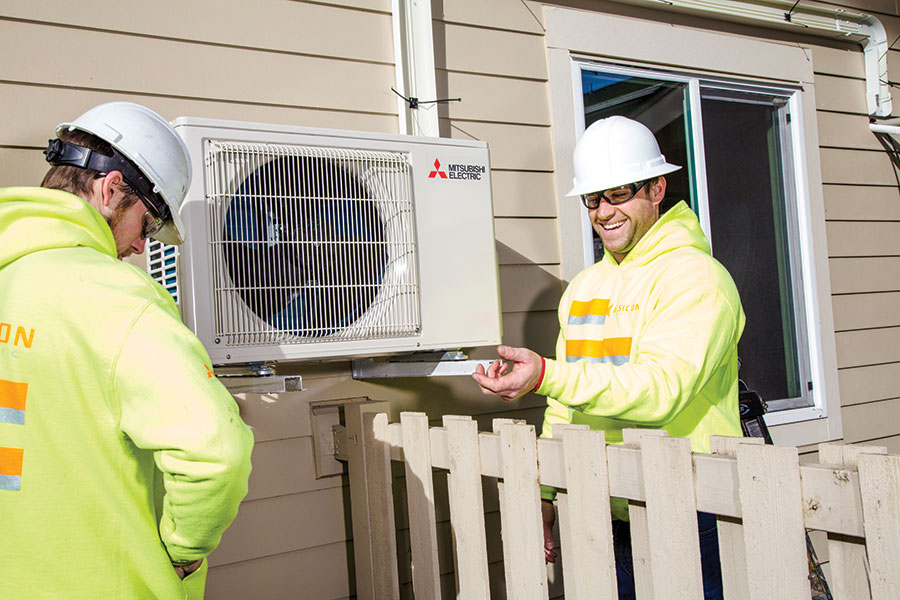
Heat pumps are efficient options, even for new construction. Photo by Marcela Gara, Resource Media.
How they work
Here’s how heat pumps work: During winter, heat pumps pull warmth from the outside air into the home; during summer, the process is reversed and warmth from inside the home is exhausted outside. It may seem odd that warmth can be found in outdoor winter air, but heat pumps are amazing inventions. They’ve become much more efficient in recent years to the point that they can be effective year-round in most cold winter climates.
The efficiency of a heat pump is measured in two ways: The HSPF (Heating Season Performance Factor) rating measures heating efficiency, and the SEER (Seasonal Energy Efficiency Ratio) rating measures cooling efficiency. The minimum ratings for a heat pump are HSPF 8.2 and SEER 14. Heat pumps with the Energy Star® rating are significantly more efficient than the minimum standard.
Heat pumps come with several perks — here are a few to keep in mind when considering a system for your home:
- Want to save money? If you are currently heating your home with electric resistance or propane or heating oil, and you seal air leaks and install additional insulation, installing an efficient heat pump could reduce your heating costs by up to 75%. And if you are currently cooling your home with an old A/C system or window A/C units, you could also cut your cooling costs.
- Want heating and cooling flexibility? A ductless mini-split heat pump can serve up to four individual zones or rooms, and each room’s temperature can be controlled separately.
Before you consider installing any new heating and cooling system for your home, it’s best to conduct an energy audit first. Your electric co-op may provide energy audits or be able to recommend a local professional.
As with any major home improvements or installations, be sure to get a few quotes and references before committing or making any payments.
About the Author
Share Your Thoughts
Have a question about this story or just want to share what you thought? We’d love to hear from you!
Keeping your home warm

Questioning Space Heater Efficiency
A reader wants to know: How can something be 300% efficient?


Tips for Heating on a Tight Budget
Resources are available to those concerned about the chill of winter