


TinyHouseNC founder Andrew M. Odom, shown with his wife Crystal and daughter Tilly Madison, has lived “tiny” in several different ways since this photo was taken in early 2012. They first lived in a converted woodworkers shop, then the tiny house on wheels shown here. His family currently lives in a small house in rural eastern North Carolina. (Photo by Andrew M. Odom)
Tackling big issues
Andrew Odom, a Four County EMC member in Duplin County, was hesitant to take on the loan for which he and his wife were pre-approved when they were looking at buying a home several years ago. When they began researching non-traditional housing, they came across the tiny house concept. They ended up building a 240-square-foot house where they lived for two years until their growing family required more space.
Odom sees great potential in tiny houses helping solve housing needs in the state. Toward that end, he organized last month’s Tiny House NC Street Festival in Pink Hill to bring together national speakers, including LaVoie, who are active in the tiny house movement. Odom’s goal was to be a catalyst for Carolinians to rethink the housing situation in the state.
“North Carolina is in need of modern, affordable, attractive, housing solutions for situations like government-subsidized housing, disaster relief housing and micro-housing for young professionals,” he says. He touts tiny houses as possible solutions.
In some areas, these small structures are being used to help reduce homelessness. Tiny Houses Greensboro is a nonprofit that is creating a tiny house community to provide a stable housing environment and community support. They partner with the City of Greensboro to develop land and address building codes and zoning issues. They also work with local housing organizations that assist in qualifying potential residents. Residents are required to participate in construction and other volunteer opportunities.
A few tiny house communities are popping up around the state. The Village of Wildflowers near Flat Rock has high-end houses that are 400 square feet and a few that are 150 square feet. Noah Palffy says the development has taken off, going from 15 homes to nearly 60 in the last six months of 2016.
“It happened overnight,” he says. “We were featured three times on Tiny House Hunters on HGTV, and that has a lot to do with it.”
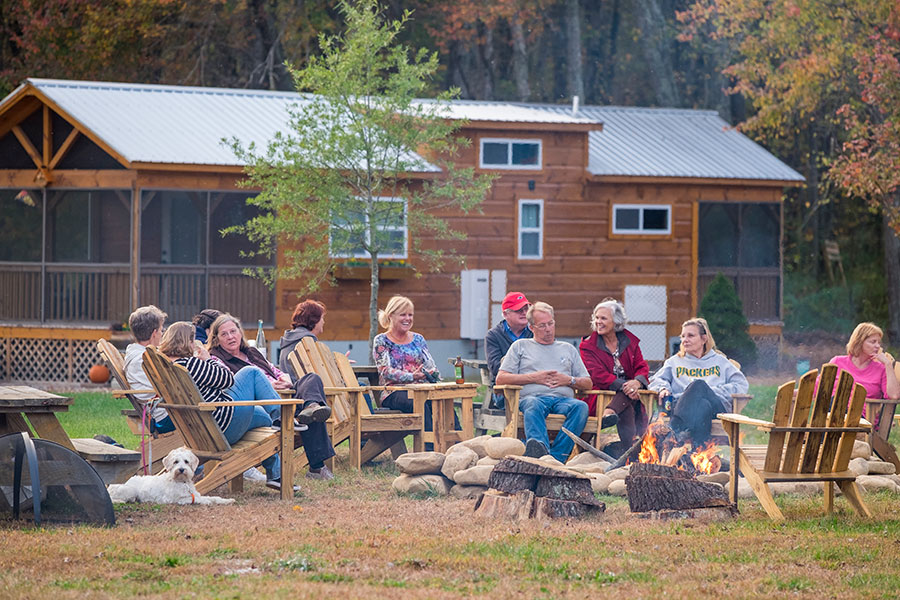
The Village of Wildflowers offers rentals so you can try a tiny home on for size. To learn more: thevillageofwildflowers.com. (photo by Noah P., The Village of Wildflowers)
The Village of Wildflowers gives you a chance to try the lifestyle before taking the plunge and ridding yourself of belongings. They have rental options for a short-term stay from a couple of nights to a month or more. Their common areas include a village hall for community gatherings and activities and outdoor spaces such as pools, fire pits and a dog park.
Tiny houses are sometimes used as a way for an aging parent or grandparent to be as close as a walk through the back yard but still have privacy and some degree of independence.
Taking the tiny plunge
Before beginning any tiny house project, check with zoning ordinances in your area to ensure tiny houses are recognized as legal dwellings. Zoning laws can be a factor for both tiny houses on wheels and those on foundations. Tiny homes on wheels are often classified as RVs and may not be considered legal dwellings.
In some locations, tiny houses that are built on a permanent foundation behind or beside another larger home may be referred to as an Accessory Dwelling Unit (ADU). It may be legal to build, depending on the zoning ordinances. Brown says that in some locales, such as Asheville, tiny homes help address housing needs.
While tiny house living often means a major purge of belongings, LaVoie recommends soul searching first.
“Read blogs, read books and get a real sense for what a tiny house is,” she advises. “The truth is, living tiny has never been about the house, and you don’t have to have a 120-square- foot home on a trailer to adopt the lifestyle.
About the Author
Share Your Thoughts
Have a question about this story or just want to share what you thought? We’d love to hear from you!


