


That perfectly sums up Tideland’s approach to hurricane preparedness. Every storm challenge we tackle becomes an opportunity to learn and better prepare for the next event. And we don’t limit “lessons learned” to our own storms. We follow events across the country and learn from other co-ops and communities.
Hurricane Helene was a natural disaster unlike any North Carolina has ever experienced. Helene knocked out communications towers and caused widespread cellular network disruptions in its wake. It also destroyed public safety communications networks in some locales.
AM/FM radio found a renewed purpose as an excellent resource for post-storm communications. Emergency managers in the affected areas went live on air to broadcast information and instructions.
On Sept. 29, commercial wireless providers reported a complete loss of cellular voice and data in 11 western North Carolina counties. That left more than 150,000 people in technological isolation.
What many did not realize at that time was that Apple had recently added texting by satellite with iOS18 for iPhone 14 models and newer. That service expansion built on Apple’s “Emergency SOS via satellite” service, released in 2023. These services enable users to connect via satellite when no Wi-Fi or mobile data services are available.
This should not be construed as a backup internet connection for personal use. Satellite connection is slow and limited. However, it is suitable for sharing where you are, what condition you’re in, and what help you may need.
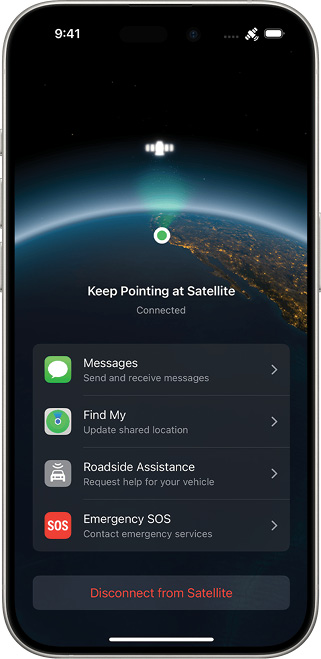
Emergency SOS becomes available when you’re in an area without any coverage. You need a clear view of the sky and the horizon. Messages can take 15 seconds to send.
The phone will guide you through the process including moving the phone to stay locked to a satellite. The feature works with other iPhone safety options so you can send emergency responders stored medical identification information from the Health app. So make sure you have populated that information, including medical conditions and anyone you want to designate as an emergency contact, in advance of a crisis.
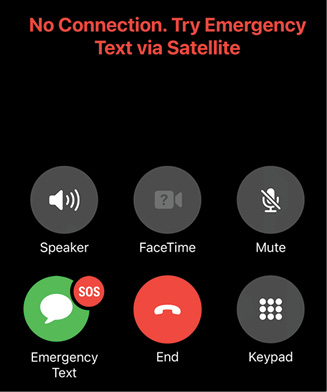
You’ll first need to try to call 911. If the iPhone finds no network available, the Emergency Text via Satellite option appears. You’ll be prompted to answer a few questions about your circumstances. Once complete, you’ll be guided to lock onto a passing satellite.
The newer iPhone satellite service for iOS18 or later is activated through the Connection Assistant in the Control Center. Tap the Celluar button on the right. Next tap Satellite and then tap Try Demo to learn how to connect.
Alternatively, you can go to Settings and type in at the top Emergency SOS. Scroll all the way down and select “Try Demo.” Do it now before you need it.
(Note: when Apple introduced this feature they made it available at no cost for two years with the activation of an eligible phone. So check with your carrier to determine your terms of access.)
Like the Emergency SOS service, it requires a clear view of the sky and horizon.
Tideland’s system maps for storm prep
Learn more about your cooperative and how it prepares for storms.
More stories like this

September rights-of-way maintenance schedule

Three represent Tideland at basketball camps

