


Hatteras Island Erosion Since 1993
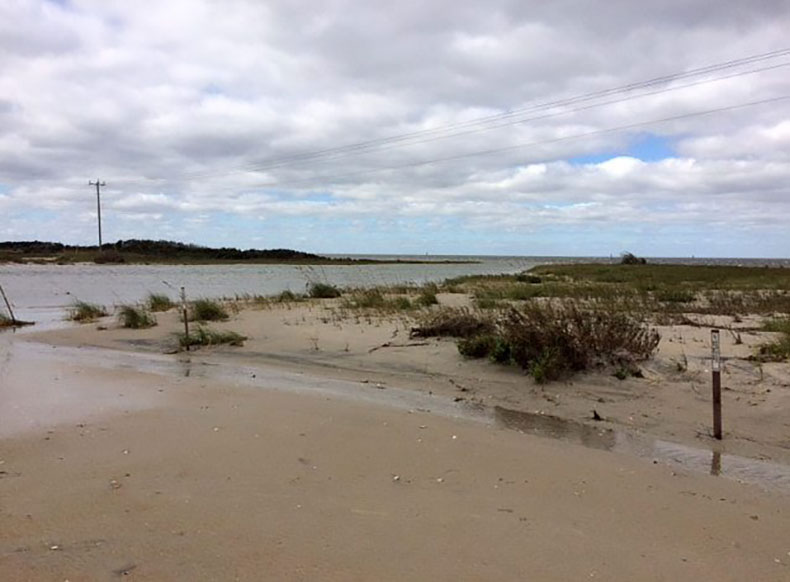
Pole Road. Photo courtesy of The Island Free Press.
“Pole Road”
In 2017, while the world was mesmerized by the sudden formation of Shelly Island alongside Hatteras Island’s Cape Point, Tideland officials were focused on an entirely different patch of land just 15 miles west-southwest.
Known locally as “Pole Road” (ORV Ramp 55) this is where you’ll find Tideland-owned poles and lines that serve as the connection between our delivery point at Cape Hatteras Electric Cooperative’s Hatteras substation and our existing submarine cable to Ocracoke.
Since Hurricane Isabel in 2003, this section of shoreline has eroded 1.5 miles. The rate of erosion significantly increased after 2012’s Hurricane Sandy.
Graphic courtesy of Howard Creech
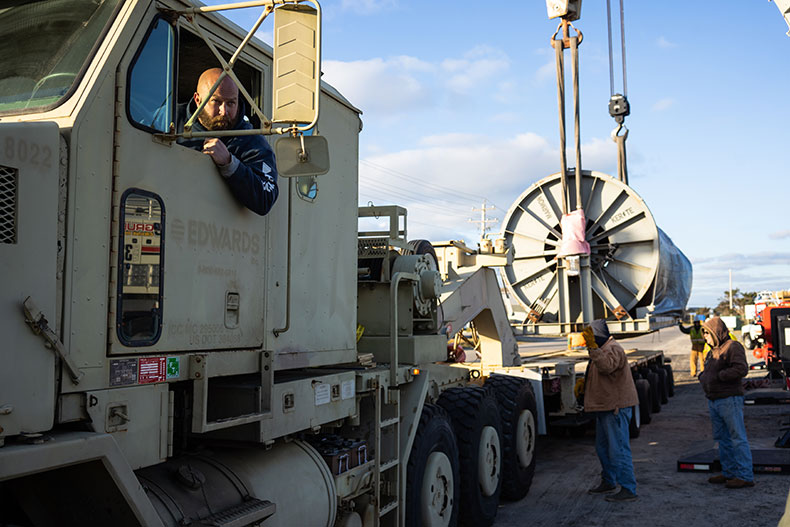
In 2015, Tideland began the process of seeking a Special Use Permit from the National Park Service in anticipation of an eventual mitigation project. The time has come to implement those plans. In early 2020, construction crews will begin installation of a 9,700-foot submarine cable starting at the Graveyard of the Atlantic Museum. It will be spliced into the existing 20,450 feet of submarine cable that crosses Hatteras Inlet. Depending upon weather and other conditions the construction project will last between one and three months.
Splice thrice
If you followed along during the events of the 2017 OBX Blackout, you were keenly aware of the delicate job it was to splice the Hatteras Island transmission line.
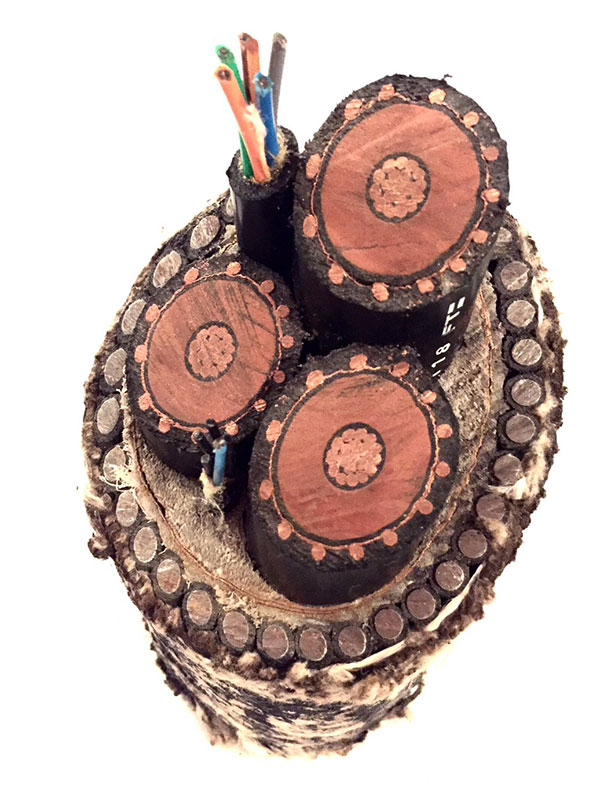
Ocracoke’s armored submarine cable
Tideland contractors will have quite the splicing job to undertake this winter as we install a submarine cable extension on the south end of Hatteras Island. Not only will crews have to splice each of the three electric lines, they’ll be tasked with splicing the fiber optic cable as well that resides within the armored cable. That portion of the job alone is expected to take between 24 and 48 hours.
The connections will be made inside a splice box, which will then be filled with a composite material to guard against water intrusion. Thus far, the splice boxes on either end of the existing submarine cable have been problem free and are now nearing their twentieth year of service.
Get to know Tideland EMC
Learn more about your cooperative, including its history and reasons for being founded.
Share Your Thoughts
Have a question about this story or just want to share what you thought? We’d love to hear from you!
More stories like this


October 16 peak hours change

Take time-of-use rates out for a test drive
