


The venomous copperhead, with triangular “Hershey Kisses” markings.
What frequent copperhead sightings mean
Every year as temperatures heat up and people spend more time outside, copperhead sightings start to rise. But that doesn’t necessarily mean their numbers are growing. While some worry that copperheads are becoming more common because their natural predators are being killed, according to NC Wildlife Resources Commission (NCWRC), there’s currently no data to back that up. What we’re really seeing is a natural uptick in activity — copperheads, like most snakes, are simply more active in the warmer months. Once fall and winter arrive and temperatures drop below 60 degrees, sightings tend to taper off again as snakes cozy up in holes and enter a state of dormancy known as brumation, similar to hibernation.
Predators that keep copperheads in check
What we’re really seeing is a natural uptick in activity — copperheads, like most snakes, are simply more active in the warmer months.
Copperheads play an important role in the ecosystem, but they’re not without their own set of predators. Birds of prey like hawks and owls, along with mammals such as foxes, coyotes, raccoons and opossums, all help keep copperhead populations balanced. Eastern kingsnakes, mole kingsnakes and racers are all non-venomous snakes that eat other snakes, including copperheads. Unfortunately, they often meet an untimely end due to being misidentified as copperheads themselves, which could upset the natural balance in your local environment.
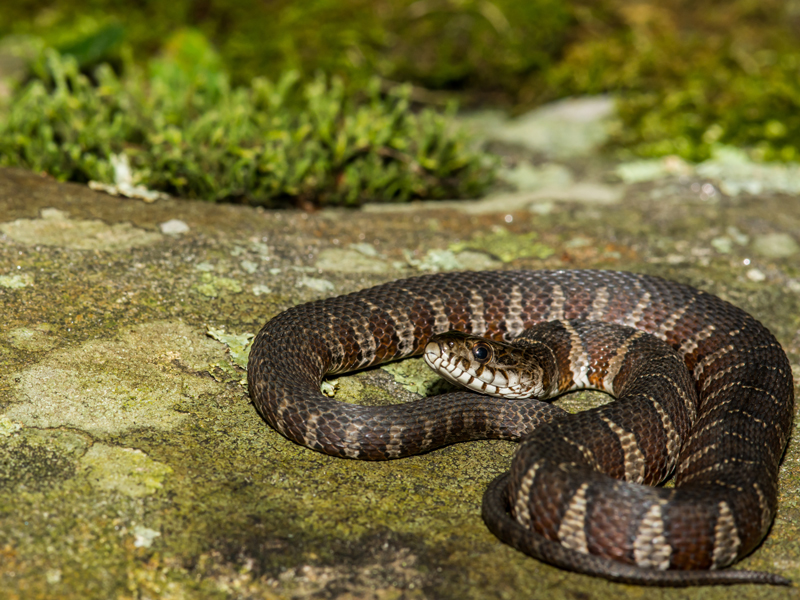
Copperheads vs. look-alikes
Since mistaken identity is a common issue, knowing how to tell copperheads apart from harmless look-alikes goes a long way. Copperheads have a very distinct pattern of “Hershey Kisses chocolates” lined up along a lighter background. The only snake with a similar appearance is the peaceful northern watersnake, usually found near water. These snakes have dark “tornado” shapes along a lighter background, and distinct dark stripes near their mouths, giving them a “toothy grin” that copperheads do not have.
 Visit NCWildlife.gov for more information and images of our North Carolina snakes.
Snake safety tips
Most snakes in North Carolina, including copperheads, aren’t aggressive and will only bite if they feel threatened. NCWRC suggests that the best thing you can do is stay alert, especially around places where snakes like to hide, such as wood piles, garden pots, ivy and thick vegetation. If you spot a snake, give it space and let it move on its own.To make your yard less inviting to snakes and their rodent prey, keep your grass trimmed, clear out clutter and make sure play areas are open and tidy. If you absolutely need a snake to move, gently spray a garden hose near its tail to encourage it to slither off safely.Understanding the snakes around you not only reduces fear —it protects your area, your pets, your family and North Carolina’s amazing ecosystem.
About the Author
Share Your Thoughts
Have a question about this story or just want to share what you thought? We’d love to hear from you!
Carolina critters


Truth or Fiction: Top Misconceptions About Snakes
Are snakes as scary as we make them seem?