


The Yadkin River in Pilot Mountain State Park.
Photo by Great Trails NC / Brianna HafermanUnderstand trail ratings
Most trails are ranked by difficulty levels — easy, moderate and hard — based on elevation gain, distance and terrain. Easy trails are generally flat, well-maintained paths with minimal inclines, making them suitable for beginners and casual hikers. Moderate trails may include steeper inclines, uneven terrain or longer distances, requiring a higher level of endurance. Hard or strenuous trails involve steep climbs, rocky paths or significant elevation gain, demanding both physical fitness and hiking experience.
Before choosing a trail, check the official rating provided by park services or hiking organizations. Trail guides and websites often include additional details about potential obstacles that could impact your hike, such as water crossings or loose gravel.
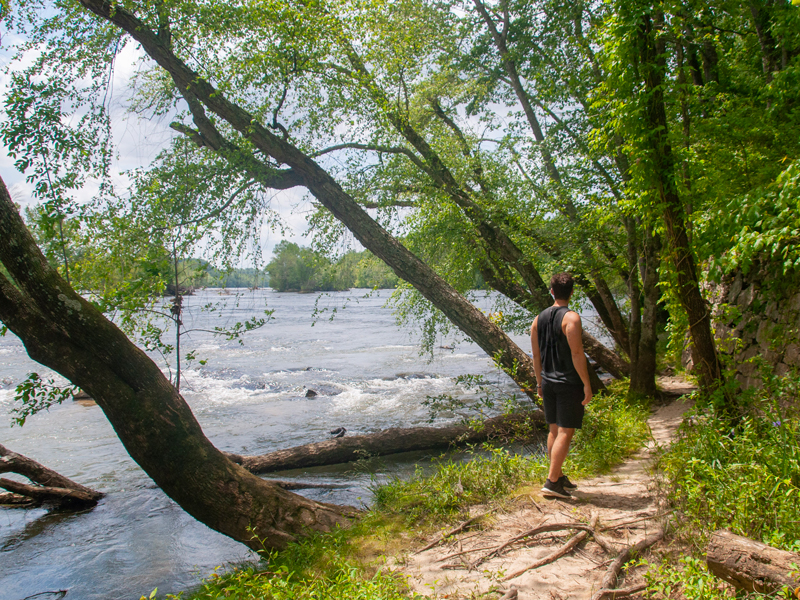
The Yadkin River in Pilot Mountain State Park. Photo by Great Trails NC / Piedmont Legacy Trails
Evaluate your skill level
Being honest about your fitness level and experience is key to choosing a suitable trail and enjoying it to the fullest. If you are new to hiking, start with shorter trails of paved walkways or smooth dirt paths before progressing to more challenging terrain. Consider things like endurance, balance and elevation changes. Even physically active individuals may find uneven trails or high-altitude hikes more demanding than expected.
Weather conditions can also affect the difficulty of a hike. A moderate trail on a dry day might become treacherous in rainy or icy conditions. Check the forecast beforehand and be prepared with appropriate gear to help ensure a safe experience.
Consider trail features
Every trail is special and unique in its own way, so pay attention to features even in trails nearby one another. Loop trails offer a continuous route back to the starting point, while out-and-back trails require retracing your steps. Some trails include boardwalks, bridges or staircases that can make hiking easier, while others feature rugged terrain requiring careful navigation.
Safety should always be a priority. Research whether a trail is well-marked and frequently traveled, especially if hiking alone. Always have water with you, and consider carrying a map and emergency supplies for rougher paths or longer hikes. If you are unsure about whether a trail suits your current ability, seek advice from local park rangers or experienced hikers.
Hiking should be an enjoyable and rewarding experience. Whether seeking a leisurely nature walk or a moderate challenge, starting with an appropriate trail helps build confidence and skills for future hikes. So grab a water and any necessary supplies, it’s time to go hiking!
Visit GreatTrailsNC.com and AllTrails.com to discover various trails in your area.About the Author
Share Your Thoughts
Have a question about this story or just want to share what you thought? We’d love to hear from you!
On the trail

