


Deer-resistant Camassias can naturalize in Carolina gardens, coming back year after year.
November is a prime time to plant spring-blooming bulbs. While the usual offerings of tulips, daffodils and crocuses are certainly worth considering, gardeners should also think about going wild with camassias.
In camassia’s case, “wild” refers to this bulbous beauty also being called “wild hyacinth,” because it is native to North American woodlands. In its many variations, camassia shows off pleasing clusters of white, violet or blue star-like flowers on slim, 2 to 3-foot stems in the spring.
As far as introducing it into a cultivated garden, any site that receives plenty of sun in the morning and some filtered shade in the afternoon is ideal. Bulbs should be planted pointed end up about 5 to 6 inches into the ground and 4 to 5 inches apart. Well-worked, evenly moist garden soil is preferred, but gardeners in the Piedmont will be pleased to know that camassia also does just fine in heavy clay.
When it comes to camassia choices, there are many. For example, “Caerulea” will grace spring gardens with pleasant sweeps of elegant, violet-tinted azure, while “Blue Danube” has similar bluish blossoms infused with a pretty purple. For lovers of lighter colors, there are the pale, near-white blooms of “Alba.” However, to add devilish dazzle to the landscape, strike an off-note with “Blue Melody” that pairs serene, bluish-purple blossoms with sassy, unapologetic, variegated foliage. The white-flowering “Sacajawea” also flaunts snappy striped leaves.
Camassias (deer-resistant, by the way) can naturalize in Carolina gardens, coming back year after year. Once established, a healthy planting will reproduce both by bulblets forming off original bulbs and seeds from the flowers.
A good setting for camassia would be among summertime perennials such as liatris, crocosmia, evening primrose, salvia, purple coneflower and black-eyed Susan that take over the eye-candy party after this bulb’s foliage and bloom spikes die down.
Camassia bulbs were well known to Native Americans, who roasted and boiled them to eat. But while they are edible, their value to modern gardeners is more in the way they look rather than how they taste, which, in the glory of a new spring, is nothing short of gorgeous.
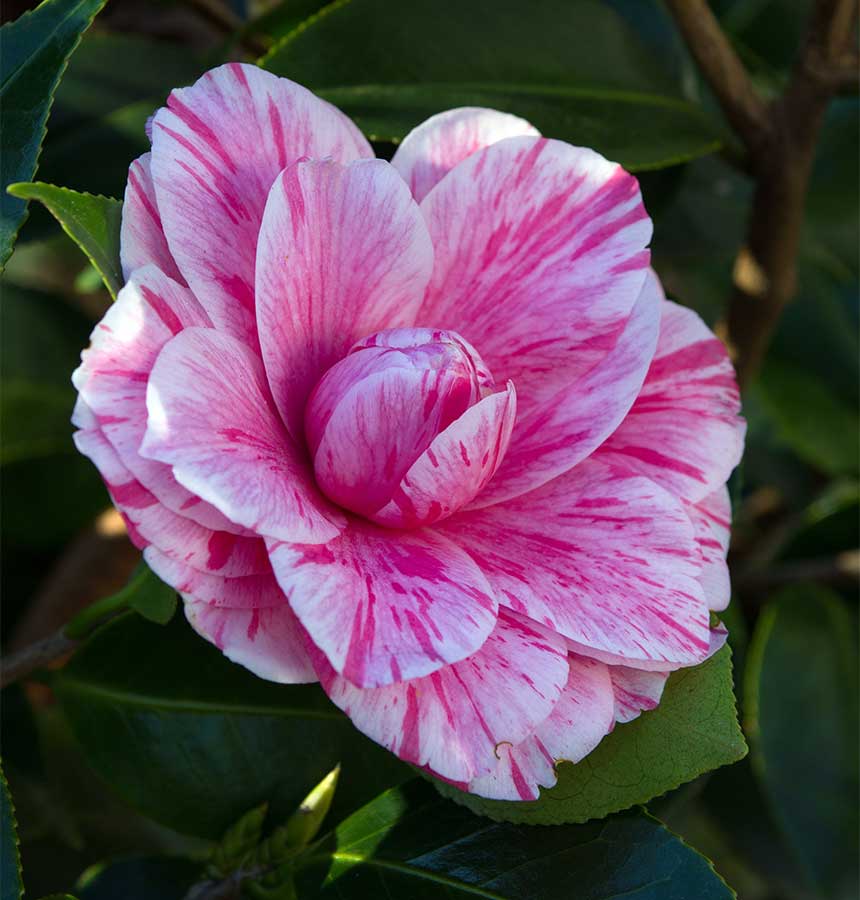
Camellia
Garden To-Dos for November
- After your fall-flowering camellias—typically Camellia sasanqua or Camellia sinensis selections—have finished blooming, you can break out the pruners to shape or shorten these evergreen bushes. But keep in mind that this chore doesn’t apply to all camellias. Although tiny, bloom buds have now formed on the popular Camellia japonica cultivars, but they don’t blossom until late winter into the new spring. This means taking clippers to these pretties at this time will snuff out what could be a gorgeous flower show early next year.
- Hardy aquatic plants can be clipped back now in the water garden, and their pots should be moved to deeper water.
- If dastardly squirrels have been digging in your bulb beds, stop ’em cold by laying down a covering of half-inch-diameter chicken wire over the ground after plantings have been completed. Sure, it won’t look pretty, but the wire can be covered with mulch and left through the spring blooming season. Get more tips in Keep Your Feeder for the Birds.
- Hollyhocks looking ragged due to the diseases botrytis blight or rust? Break their development cycle by cutting down and trashing (do not compost) old stems as well as raking up any surrounding leaf debris, where these nasties like to overwinter before resurfacing in the spring. Get more tips on growing Hollyhocks.
About the Author
Share Your Thoughts
Have a question about this story or just want to share what you thought? We’d love to hear from you!
More November Gardening Tips


