


Farris Leonard (second from right) speaks with an electrical lineworker class at James Sprunt Community College.
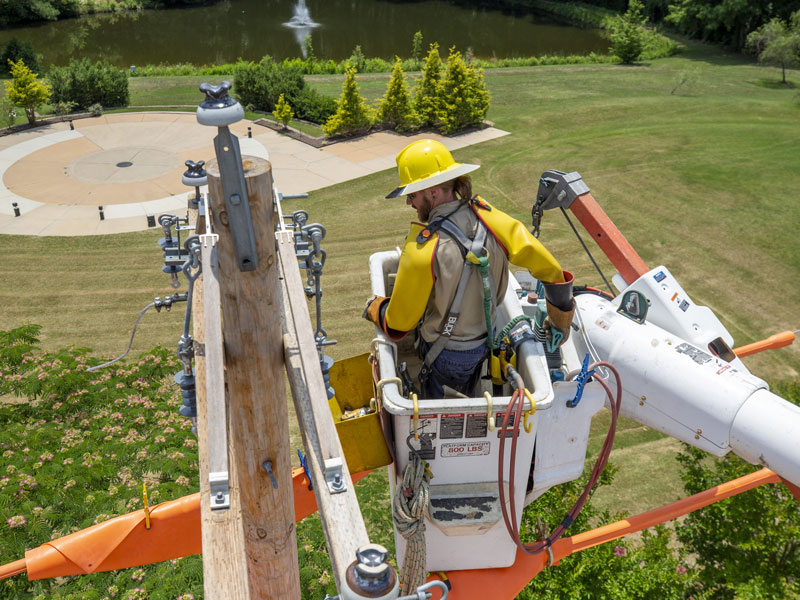
Through a robust Job Training and Safety program shared by North Carolina’s 26 electric cooperatives, current and future lineworkers commit to putting safety first through new and continuing education courses at lineworker schools that feature cutting edge technologies for hands-on training, as well as classroom instruction.
“The business we’re in requires that safety is part of a lineworker’s DNA,” said Farris Leonard, director of Job Training and Safety for North Carolina’s Electric Cooperatives. “Our team is committed to facilitating that culture of safety in everything we do from training schools to our time working directly with cooperative teams.”
Lineworker schools
Since 1998, North Carolina’s electric cooperatives have partnered with Nash Community College in Rocky Mount, which operates the Lineman Training Academy.
The program was created by the co-ops to provide training for lineworkers as they entered the field, as well as an important opportunity for academic advancement, as students can combine their job training with academic curriculum to graduate with an associate’s degree in two years.
Lineworker career field set to grow
Beyond the formal partnership with Nash Community College, North Carolina’s electric cooperatives have worked with community colleges across the state on lineworker training programs and other workforce development initiatives for years.
“Many of these schools are located in the same rural areas where our co-ops are based, and they have a real impact on our communities and workforce” Leonard said.
Approximately 1,400 lineworkers serve North Carolina’s 26 electric cooperatives, and there are more than 120,000 electric lineworkers nationwide. The career field is rapidly expanding, and lineworker jobs are in demand across North Carolina and the nation.
“Consistent training programs will allow co-ops to have the same expectations for their lineworkers after completion and allow a smoother and safer transition into the field.”
Currently there are 10 lineworker schools in operation across North Carolina. While this number is expected to grow, Leonard says coordination will be key.
“A large percentage of the workforce has retired or will retire over the next several years, taking their knowledge and experience with them, which makes our focus on training and development even more important,” Leonard said.
“With coordination comes consistency,” he said. “Consistent training programs will allow co-ops to have the same expectations for their lineworkers after completion and allow a smoother and safer transition into the field.”
Patience and safety are key
This summer marks two years since leaders at James Sprunt Community College in Kenansville asked Leonard and his Job Training & Safety team for advice and information about the types of programming that would create a structured and disciplined training school for interested students.
To kick off the program for the third class of students, Leonard was invited to share his thoughts on how students can make the most of their time in the program. Noting that a steady, methodical pace allows for critical thinking, Leonard conveyed a simple and important message: “Be patient and relentlessly focused on safety.”
About the Author
Share Your Thoughts
Have a question about this story or just want to share what you thought? We’d love to hear from you!
Lineworkers in training

New Lineworker Training Unit Creates Realistic Experience
NC co-ops are industry leaders in using the technology

Electric Co-op Lineworkers Gain Knowledge at Nash Community College
14 electric cooperative linemen completed advanced education work in 2021

Speed Under Pressure: Lineworkers Test Lifesaving Skills
Pole Top Rescue Competition held at Nash Community College