


Currently, about 80 families utilize the Dr. John Wilson Community Garden. And the occational black bear that ambles through …
Phyllis Malcolm and and Kip Pritchard harvest from plots earmarked for donation.
This is something Diana Schmitt McCall says she thinks about a lot. McCall is the director of the Dr. John Wilson Community Garden in Black Mountain, one of 249 community gardens registered for free with NCCGP.
The town of Black Mountain has effectively given McCall creative autonomy, but all of her efforts are informed by the garden’s founder, Dr. John Wilson, and his guiding mission: Everything the garden does must provide a place for people in the community to learn about food and not just grow food, but grow enough food to share.
Currently, about 80 families utilize the garden to grow food, with 10 percent of each of their plots earmarked for donations. McCall also oversees two donation programs that last year resulted in the donation of 4,000 pounds of food.
The benefits of being in the NCCGP are clear for gardeners who are working in relative isolation, according to McCall. It can shorten the learning curve enormously, she says, allowing those new to community gardening to learn from others’ mistakes instead of making their own. But NCCGP’s new partnership with RAFI has McCall rethinking whether the traditional idea of a community garden is the right model for rural North Carolina.
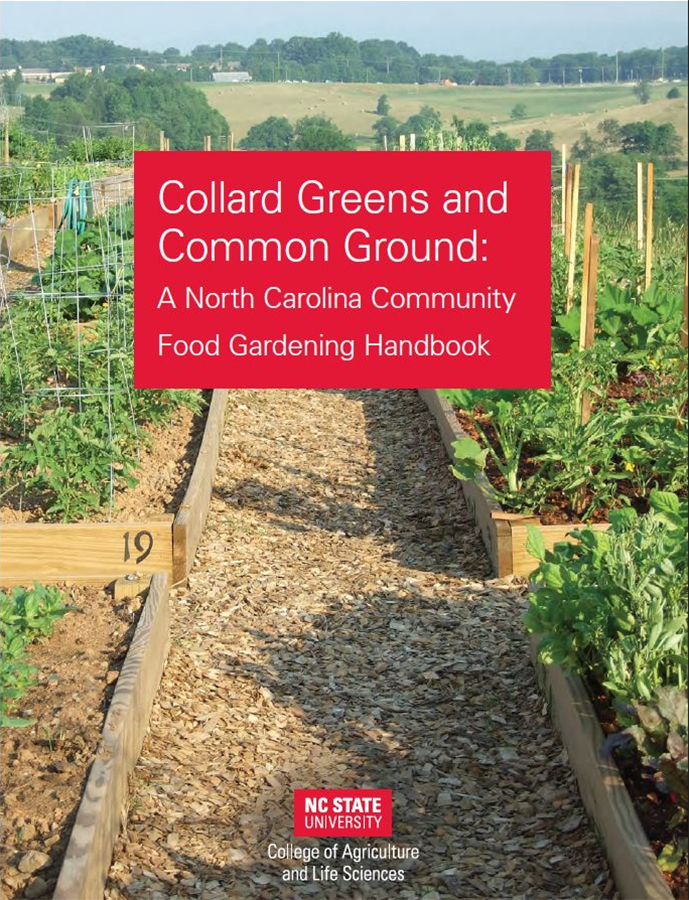
A Community Garden Handbook
Don Boekelheide co-wrote “Collard Greens and Common Ground” with NC State Extension Urban Horticulture Specialist Lucy Bradley as a free online North Carolina community gardening handbook. This tool for organizing and managing community gardens in North Carolina covers the entire process, from the first steps in organizing a new community garden to strategies to keep them flourishing over time. Visit Collard Greens and Common Ground for the full online resource.
Feeding the multitude
McCall grew up on 50 acres in a rural area, and her family, like many in rural North Carolina, primarily interacted with people who attended her church. While she is hesitant to “speak boldly” on rural communities without a broader understanding of their individual needs, she could see how creating a secular community garden in a rural area may not make a lot of sense.
“Rural areas in North Carolina have churches, and churches have land. So moving forward, what makes sense to me is partnering with churches,” McCall said. “Rural areas also have a great deal of food insecurity. If a church could not only provide community to its congregation, but food as well, it’s a win-win for everyone.”
Some of the community gardens in NCCGP’s network are faith-based, including the Bricks Healthy Lifestyles Garden in Whitakers, which has over seven acres allotted for the growth of food to provide free fresh fruits and vegetables to those in need.
There’s also the Friendship UMC Community Garden in Cleveland County, which grows vegetables for those in the congregation and “neighbors in need.”
If you’re interested in starting a community garden — whether you’re in a major city or a rural community — McCall advises consulting with the American Community Garden Association’s guidelines, which provide helpful tips for getting started (communitygarden.org). Those in rural areas also can be on the lookout for NCCGP educational opportunities in their area (nccgp.org/events), including workshops, events and community garden celebrations.
“Every community garden has a different reason for being. The best tip is that before you start, think of the neighborhood or community the garden will be in, think about that community’s assets and desires,” McCall says. “If you allow the community’s assets and desires to serve one another, you can build something that will last.
The Dr. John Wilson Community Garden in Black Mountain is a member of Gardens That Give WNC, a regional association of philanthropic gardens that grow food for donation. Source: Nick Iway
About the Author
Share Your Thoughts
Have a question about this story or just want to share what you thought? We’d love to hear from you!
More Carolina Country garden guides

Gardeners: Give Yourself a Raise
Elevated beds take gardening to the next level

Herbs for Everyone
Add these hearty kitchen necessities to any garden
