


Beneath a rushing mountain stream lies a hush of moss, gravel and shadow. The water dances above, but under a wide, flat stone, stillness reigns. Blending so perfectly with its surroundings, the creature beneath is almost invisible — unless you know where to look.
The eastern hellbender is a flat, wrinkled giant, shaped by time to thrive in fast-flowing streams. It does not fight the current — it becomes part of it, absorbing oxygen through loose folds of skin and feeling the world’s vibrations through water and stone.

The hidden giant of Appalachian waters
The eastern hellbender is one of the largest salamanders in North America, capable of reaching over two feet long. Perfectly adapted to fast-moving streams, its broad, flattened body allows it to squeeze beneath large, flat rocks. Its coloring (grayish to reddish brown with darker mottling on the back and a lighter, uniform belly) provides excellent camouflage against rocky streambeds.
With a rounded snout and small, underdeveloped eyes, the hellbender relies on sensing movement and vibration rather than sharp vision.
Having changed very little over millions of years, hellbenders are often called “living fossils.” Because adult hellbenders breathe almost entirely through their skin, they depend on cold, clean, oxygen-rich water to survive, making them powerful indicators of water quality.
In late summer to early fall, males dig shallow nests beneath rocks and fertilize the female’s clutch of up to 500 eggs. The males remain to guard the developing young until they hatch nearly two months later.
Life beneath the current
Hellbenders are completely aquatic, living in clear, rocky streams and rivers at higher elevations, especially in the Blue Ridge and Appalachian Mountains. These habitats offer the cold temperatures, stable streambeds and dissolved oxygen levels hellbenders need to survive. Their dependence on clean, stable habitats makes them especially vulnerable to sedimentation, pollution and damming.
They rarely stray far from their shelter, spending most of their lives wedged beneath large, flat stones. Largely nocturnal, hellbenders emerge at night to ambush prey. Crayfish make up the bulk of their diet, though they’ll also eat small fish, amphibians and aquatic insects. Rather than chase, they wait in stillness and strike with quick reflexes when the moment is right.
From folklore to festival
The hellbender’s unusual form and secretive nature have inspired myths for generations. In Appalachian folklore, it was rumored to be a creature “hell bent” on returning to the Underworld. Locals gave it many colorful names, including “snot otter,” “devil dog” and “Allegheny alligator.”
But what once stirred fear now inspires celebration. The first-ever Hellbender Festival was held in Spruce Pine in August, honoring these ancient amphibians with a community celebration of clean water, native wildlife and mountain pride.
More than just a salamander, the hellbender is a symbol of resilience, balance and legacy. By protecting its streams, we protect the heart of the Blue Ridge. Visit NCWildlife.gov to learn more about this treasured creature.
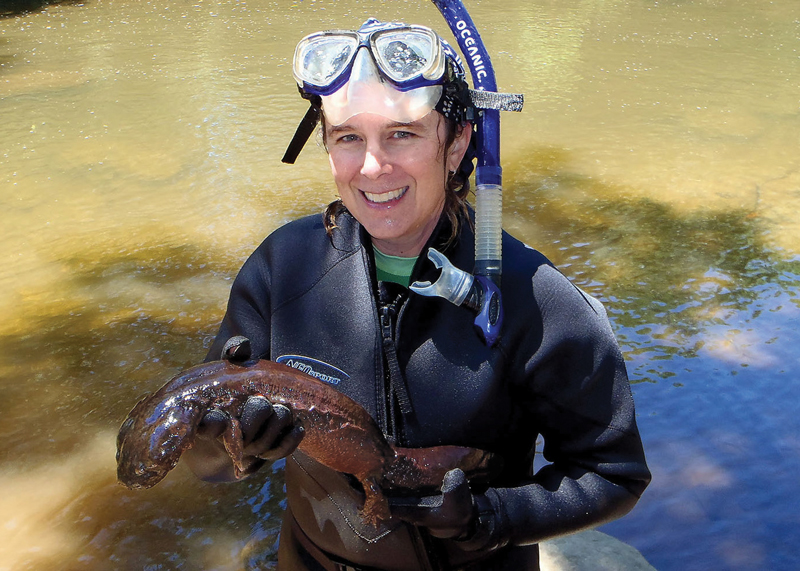
Over the years, locals gave it many colorful names, including “snot otter,” “devil dog” and “Allegheny alligator.”
Hellbender facts
- The eastern hellbender is one of only three giant salamanders found in the world.
- Unlike most salamanders, adult hellbenders breathe primarily through their skin.
- Hellbenders are indicators of excellent stream health.
- Spruce Pine celebrated these giants in August with its Hellbender Festival.
About the Author
Share Your Thoughts
Have a question about this story or just want to share what you thought? We’d love to hear from you!
More stories like this


